All Martial Arts
Complete catalog of martial arts and styles
Abir (Hebrew Warrior Art)
Traditional Israeli combat system derived from ancient Hebrew tribal techniques.
Israel Israel
Adimurai
Tamil bare-hand striking art from the Kanyakumari area; the only style that also teaches the secret varma points.
India India
IndiaAfrican Traditional Wrestling (ECOWAS)
Unified West African traditional wrestling sport organized under the ECOWAS framework.
Niger Niger
NigerAikibudo
Alain Floquet's French offshoot of aiki-jujutsu, blending Yoseikan, Daitō-ryū and Katori Shintō-ryū swordsmanship, with no competition.
France France
Aikido
A Japanese art of throws and joint locks with no sporting rivalry; the energy of an attack is redirected rather than stopped.
Japan Japan
JapanAlysh (Kyrgyz Belt Wrestling)
Kyrgyz belt wrestling. The grip on the belt may never be released, so the fight for grip falls away and only throwing mechanics and balance remain.
Kyrgyzstan Kyrgyzstan
Amateur Sumo
The sporting form of sumo outside the Japanese professional circuit. It has weight classes, a women'"'"'s division and world championships since 1992.
JapanArahata-ryu Bojutsu
Traditional samurai koryu bujutsu school specialized in heavy wooden staff combat.
JapanAraki-ryu Torite Kogusoku
A Japanese old school focused on seizing and on fighting in light armour. It is not about beauty of movement but about controlling and leading an opponent away.
JapanArmizare (Fiore dei Liberi)
The fighting art of master Fiore dei Liberi, documented by a manuscript of 1409. It covers wrestling, dagger, sword, axe and mounted combat.
Italy Italy
ItalyArmy Hand-to-Hand Combat (ARB)
A Russian army combat sport from the airborne forces. It permits strikes, throws, joint locks and finishing a downed opponent.
Russia Russia
Asayama Ichiden-ryu
A Japanese comprehensive old school from around 1600. Its unarmed part is the best preserved; the name is today borne by several separate lines.
JapanAshihara Karate
Full-contact karate founded in 1980 by Hideyuki Ashihara. Instead of trading strikes it circles around the attack and hits from the flank or behind — the tactic called sabaki.
JapanAtarashii Naginata (Modern Naginata)
The modern sport naginata of 1955; unlike kendo it also strikes the shin, and most of its practitioners are women.
JapanBaguazhang
An internal Chinese style built on walking a circle and open-palm technique; its weight lies in evasion and change of direction. Founded by Dong Haichuan in the nineteenth century.
China China
ChinaBaihequan (Fujian White Crane)
A southern Chinese style from Fujian, traditionally attributed to a woman, Fang Qiniang. Through Naha-te it stands at the root of Okinawan karate, above all Goju-ryu.
ChinaBaji Zhandao
A modern Chinese system founded in 2007 that combines bajiquan with other styles. Practiced empty-handed and with weapons, from the dagger to the spear.
ChinaBajiquan
A northern Chinese style from Hebei built on a single idea: get inside. Crushing close-range strikes, whole-body impact and work with elbow and shoulder.
ChinaBajutsu
Japanese mounted warfare of the samurai: combat from horseback, care of the animal and gear, increasingly ceremonial after 1600.
JapanBak Mei Kung Fu
A southern Chinese style of short, explosive power with a hard, compact expression. Tradition links it to a Taoist monk; the traceable lineage begins only in the twentieth century.
ChinaBak Sil Lum (Northern Shaolin)
Collective name for the northern Chinese styles of the Shaolin tradition. It fights at longer range, with deep stances and a rich register of kicks.
ChinaBakom (Vacon)
A Peruvian self-defence system from Lima put together in the early 1980s by Roberto Puch Bezada. It grew out of street fighting, not a school.
Peru Peru
PeruBakti Negara (Balinese Silat)
The most widely practised martial art of Bali, established in 1955 by four independence veterans. It rests on the Balinese philosophy Tri Hita Karana.
Indonesia Indonesia
Balintawak Arnis
A Filipino single-stick style from 1952. It has no forms: from the first lesson work is in pairs, so that reflex forms rather than a memorised answer.
Philippines Philippines
Bandesh (Indian Unarmed Locks & Disarms)
Ancient Indian unarmed discipline focused on disarming an armed attacker without injury.
IndiaBando
The Burmese system of unarmed fighting, which begins by giving ground and answers only when the attack runs out. It is organised around some twelve animals.
Myanmar (Burma) Myanmar (Burma)
Banshay (Burmese Weapon Fighting)
Burmese weapons art forming the armed branch of thaing. Sword dha, staff and spear; forms practiced with the blade sheathed, opened by a war dance with one or two swords.
Myanmar (Burma)Baoding Shuai Jiao (Kuai Jiao)
The Baoding branch of Chinese jacket wrestling, known as kuai jiao, or fast wrestling. The throw must land before the opponent can settle into the grip.
ChinaBaok Chambab (Khmer Traditional Wrestling)
Cambodian traditional wrestling over three rounds, with a greeting dance and drum music; attested on the Angkor reliefs.
Cambodia Cambodia
Bartitsu
A British self-defence system assembled in London around 1898 by Edward Barton-Wright from jujutsu, boxing, savate and stick work. One of the first mixed fighting methods.
United Kingdom United Kingdom
Bataireacht (Irish Stick Fencing)
Traditional umbrella Irish martial art of fencing with the blackthorn Shillelagh stick.
Ireland Ireland
Bâton de Combat (French Long Staff)
French two-handed staff fighting, 140 cm long, with nine codified strikes; the sporting twin of canne de combat.
FranceBâton de Joinville (Joinville Military Staff)
Historical French military staff fencing system from the 19th century.
FranceBatuque
An extinct Bahian game with one goal: throw your opponent to the ground with hips, thighs, or feet. A forerunner of capoeira.
Brazil Brazil
Beach Sambo
Dynamic international sport variant of Sambo wrestled on sand.
RussiaBeach Wrestling
A United World Wrestling discipline contested on sand. Bouts are fought standing in a seven-metre circle for three minutes without a break.
Switzerland Switzerland
Beijing Shuai Jiao
The Beijing branch of Chinese jacket wrestling. High throws over the back and sweeps, technically rooted in the Manchu buku wrestling of the imperial guard.
ChinaBojuka
American tactical self-defense system designed for street survival.
United States United States
Bokator
A Cambodian fighting system broader than ring kun khmer: it includes ground fighting, locks, throws and weapons — short sticks, the bamboo staff and the krama scarf.
CambodiaBokh
Mongolia's national wrestling and one of the three manly games of the Naadam festival. The tournament is held under open sky on grass, with hundreds taking part at once.
Mongolia Mongolia
Bolognese Fencing
The Italian fencing tradition of Bologna, documented by a series of sixteenth-century treatises. Marozzo did not found it; Lippo Dardi did, in 1415.
Italy
Boxing
Fighting with the fists alone, in gloves, weight classes and rounds — the oldest codified combat sport.
United Kingdom
Brazilian Jiu-Jitsu
A Brazilian ground-fighting art built on joint locks and chokes; it lets technique control a stronger opponent.
BrazilBrotherhood of Saint Mark (Marxbrüder)
A German fencing guild which from 1487 held, by imperial privilege, the monopoly on the title Master of the Long Sword. Its seat was Frankfurt.
Germany Germany
Buhurt (Armoured Combat)
A modern full-contact sport fought in steel armour. It is not a reconstruction of technique but a competition: the team with fighters left standing wins.
Ukraine Ukraine
Bujinkan Budo Taijutsu
A school led since the 1970s by Masaaki Hatsumi, uniting nine traditional lineages. The documentary basis of their ninja part is disputed among historians.
JapanBuryat Bokh (Buryat Wrestling)
Traditional wrestling style of the Buryat people in Siberia near Lake Baikal.
RussiaBuza
Russian folk close-combat art from the Novgorod region, where dance and rhythm cannot be separated from technique. Revived in the nineties.
RussiaByakuren Kaikan
A Japanese full-contact school that, despite using Kyokushin competition rules, did not emerge from Kyokushin but from Shorinji Kempo instead.
JapanCabales Serrada Escrima
Philippine Eskrima system introduced in USA specialized in close-quarters single stick.
PhilippinesCanary Islands Wrestling
Canarian wrestling in the sand circle called terrero, contested by teams. A fall means touching the sand with anything but the feet; the modern rules were written as early as 1872.
Spain Spain
SpainCanne de combat
French walking-stick fencing. It grew out of nineteenth-century Parisian self-defence; Maurice Sarry turned it into today's sport in the 1970s.
France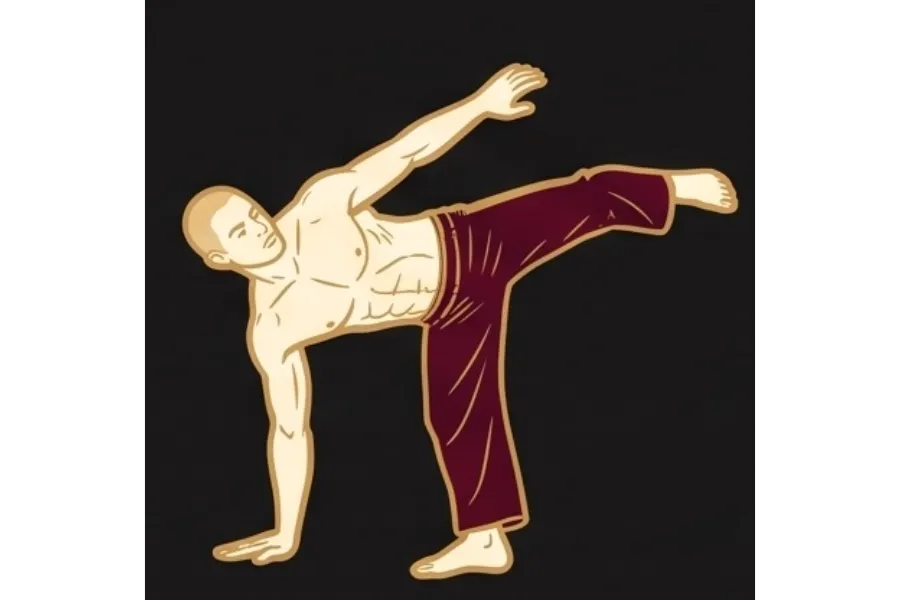
Capoeira
A Brazilian martial art fused with dance and music; practised in a circle called the roda to the sound of the berimbau.
BrazilCapoeira Angola
The older and slower branch of Brazilian capoeira. It is played low to the ground and the berimbau sets the tempo; Mestre Pastinha organised it as a school.
BrazilCapoeira Miudinho
A way of playing capoeira introduced by Mestre Suassuna in the 1990s. It is played close in, low, with short and precise movement.
BrazilCapoeira Regional
The capoeira style Mestre Bimba created in Salvador and taught from 1932 in the first officially recognised capoeira school.
BrazilCatch Wrestling
British submission wrestling, born in the factories of nineteenth-century Lancashire. The full name, catch-as-catch-can, sums up its nature: any grip anywhere is allowed.
United KingdomCentral Kalaripayattu (Madhya)
Central geographical branch of Indian Kalaripayattu famous for circular motion and jumps.
IndiaChangquan (Traditional Long Fist)
A family of northern Chinese styles with long reach, high kicks and deep stances — not a single style. The modern competition version dates from the 1950s.
ChinaChaquan (Cha Family Boxing)
A Shandong long-fist style tied to Chinese Muslims. Long reach, acrobatics, and ten rows of tantui kicks as the foundation of power.
ChinaChausson
The Marseille leg game of the 18th and 19th centuries; high kicks with a hand on the ground and slaps instead of punches.
FranceCheibi Gad-Ga
Manipuri sport with a leather-wrapped stick and round shield, descended from sword-and-shield combat. The winner scores the most hits.
IndiaChen Style Tai Chi
The oldest documented branch of tai chi, from which all other family styles derive. It alternates slow passages with fajin releases and contains stamps and jumps.
ChinaCheng Style Baguazhang
The most widespread branch of baguazhang; Cheng Tinghua brought into it the grips and throws of shuai jiao wrestling.
ChinaChess Boxing
A sport alternating rounds of boxing and chess. You win by checkmate, knockout, running out of chess time, or on points.
GermanyChidaoba
Traditional Georgian national wrestling in chokha coat with music.
Georgia Georgia
Chito-ryu Karate
A Japanese karate style from 1946. Its founder was a physician and reshaped the stances so they do not load the knees over time. Its central kata is Seisan.
JapanChokushin Kage-ryu Kenjutsu
Traditional samurai koryu bujutsu school famed for extra-long Shinai bamboo sword.
JapanChokushin-ryu Jujutsu
Traditional samurai koryu bujutsu school teaching wrestling, chokes and shoulder locks.
JapanChokushin-ryu Naginatajutsu
Traditional samurai koryu bujutsu school specialized in Naginata polearm combat.
JapanChoy Gar
One of the five family styles of southern China. It joins rat and snake: short steps, low stances and swift direct strikes.
ChinaChoy Li Fut
A southern Chinese style founded in 1836 by Chan Heung. It joins the low stances and strong arms of the south with the long swinging strikes and turns of the north.
ChinaChuka Gar (Chuka Southern Praying Mantis)
Rare Southern Chinese branch of Southern Praying Mantis focused on close combat.
ChinaChun Kuk Do
American hybrid martial arts system created by famous actor Chuck Norris.
United StatesChuojiao (Poking Foot)
A northern Chinese style built on kicks delivered from close range. Its documented line starts in 19th-century Hebei; the older pedigree is legend.
ChinaCiucckju (Corsican Folk Wrestling)
Traditional folk wrestling sport of mountain shepherds from the island of Corsica.
FranceCivilian Krav Maga
The civilian form of Israeli self-defence, adapted by Imi Lichtenfeld for ordinary people after he left the army. It has had its own association since 1978.
IsraelCollar and Elbow
Irish wrestling with a fixed grip on collar and elbow that may not be released. The restriction removes the heavier man's advantage; footwork and timing decide.
IrelandCombat Hopak
A Ukrainian art assembled in 1985 by Volodymyr Pylat from folk fist fighting, wrestling, Cossack sabre fencing and Cossack war dances.
UkraineCombat Sambo
Combat branch of Soviet sambo: adds strikes, kicks and weapon defense to throws and locks, fought in protective gear.
RussiaCombato (Canadian Tactical Combat)
A Canadian close-combat system from the early 20th century. It rests on leverage, not strength; after the war its author softened it into police-oriented Defendo.
Canada Canada
Commando Krav Maga
A Canadian offshoot of Israeli self-defence led by Moni Aizik. It leans more on judo and jujutsu than the Krav Maga mainstream.
IsraelCoreeda (Aboriginal Wrestling)
Traditional Australian Aboriginal wrestling combining kangaroo dance and takedowns.
Australia Australia
Cornish Wrestling
The Cornish national wrestling style in canvas jackets; a fall called a back decides it and ground wrestling is not allowed.
United KingdomCorsican Stiletto Fencing (Stiletto Corsa)
Traditional folk fencing school with the thin Corsican Stiletto dagger from Corsica.
FranceCossack Spas
Traditional Ukrainian survival and combat system of Zaporozhian Cossacks.
UkraineCotswold Shin Kicking
An English folk discipline from the Cotswold Olimpick Games, founded in 1612. Opponents hold each other's shoulders, only the shin may be kicked, and the only padding is straw.
United KingdomCumberland and Westmorland Wrestling
English folk wrestling from Cumbria. The hold is kept from start to finish, so the fight for grip falls away and pure hip work and balance decide.
United KingdomCuong Nhu (Vietnamese-American Martial Art)
Synthetic martial art combining Vietnamese Vovinam with Shotokan Karate, Judo and Wing Chun.
Vietnam Vietnam
Daito-ryu Aiki-jujutsu
The school from which aikido came. The Takeda family traces it to the eleventh century, but it was demonstrably established as a public art only by Takeda Sokaku in the 1890s.
JapanDambe
The boxing of the Hausa people of northern Nigeria. One hand is wrapped and strikes, the other guards; a round ends when a fighter goes down.
Nigeria Nigeria
Dardi School Bolognese
The oldest documented layer of the Bolognese fencing tradition. Dardi taught both geometry and fencing at Bologna, and that geometric cast still shows.
ItalyDefendo
Scandinavian self-defense system founded by Jyrki Saario in 2005: simple solutions from natural reactions, four programs.
Finland Finland
Defendu
A close-combat system put together in the 1920s by William Fairbairn for the police in Shanghai. It is not a school with forms but training for a few weeks.
United KingdomDestreza Vulgar
The older, practice-based Iberian fencing tradition, built on set tretas, which theorists of the verdadera destreza dismissed as unscientific.
SpainDitangquan (Ground Tumbling Boxing)
A northern Chinese style that goes to the ground on purpose and fights from there. The fall is a technique, not an ending, and a standing opponent has no answer.
ChinaDoce Pares
A Filipino eskrima system founded in Cebu in 1932 by twelve masters. It works in three ranges and has its own competition rules.
PhilippinesDog Brothers Martial Arts
American system born from full-contact stick fighting: minimal padding, Filipino Kali and Brazilian jiu-jitsu tested in real sparring.
United StatesDonga (Stick Fighting)
A ceremonial duel with a long pole among the Suri and Mursi of Ethiopia'"'"'s Omo valley. It is held after harvest and settles the standing of young men.
Ethiopia Ethiopia
Duanquan (Short Range Boxing)
Northern Chinese kung fu style specialized exclusively in close-quarters combat.
ChinaDumog (Filipino Wrestling)
The wrestling layer of the Filipino arts. It is fought standing: the system assumes weapons and several opponents, where going to the ground is a mistake.
PhilippinesDussack Fencing
Historical European fencing with single-edged dussack training sword in Renaissance Europe.
Czechia Czechia
Dutch Kickboxing
The Dutch competitive school of kickboxing, born from Kyokushin karate meeting Japanese kickboxing. It is built on hand combinations finished with a kick.
Netherlands Netherlands
Emeiquan (Emei Mountain Kung Fu)
A group of fighting styles from Sichuan that trace themselves to sacred Mount Emei; no unified historical school is documented.
ChinaEnglish Quarterstaff Fencing
Traditional English martial art of fencing with the two-handed heavy oak Quarterstaff.
United KingdomEngolo (Zebra Combat Dance)
An acrobatic combat game of southern Angolan herders, with kicks from a handstand. Its link to capoeira is contested, not documented.
Angola Angola
Enshin Karate
Full-contact Japanese karate founded in 1988. Built on sabaki, deflecting an attack and moving behind the opponent, and on the Sabaki Challenge tournament.
JapanEsgrima Criolla (Gaucho Knife Fighting)
The gaucho knife fighting of Argentina and Uruguay. The aim of a duel was not to kill but to mark the opponent with a scar on the face.
Argentina Argentina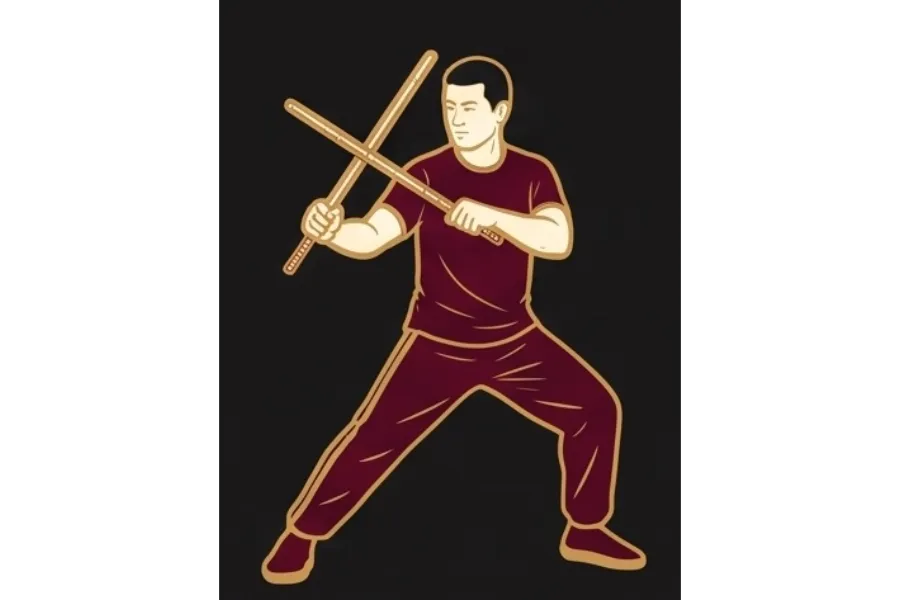
Eskrima
A Filipino weapon-based martial art — rattan stick, knife and improvised objects; you learn from the weapon, not from empty hands.
PhilippinesEvala (Togo Wrestling)
Traditional ritual wrestling initiation ritual of young men in Togo.
Togo Togo
TogoFanziquan (Tumbling Fist)
A northern Chinese style already named in General Qi Jiguang'"'"'s 16th-century manual. It is built on the density of paired strikes rather than single-blow power.
ChinaFreestyle Wrestling
The Olympic wrestling style which, unlike Greco-Roman, permits holds on the legs. On the programme since 1904; the women's competition was added in 2004.
United StatesFu Jow Pai (Tiger Claw)
A southern Chinese style built on seizing and tearing with the hand held as a tiger's claw. In 1957 it became one of the first Chinese arts publicly taught in the United States.
ChinaFudo-ryu Kenjutsu
Traditional samurai koryu bujutsu school focused on uncompromising sword fencing and firm stance.
JapanFut Gar (Buddhist Family Boxing)
A southern Chinese style from Guangdong that builds on the open palm rather than the fist. Its stances are higher and more mobile than in other southern schools.
ChinaGao Style Baguazhang
The branch of baguazhang split into xiantian circular groundwork and sixty-four houtian palms along straight lines.
ChinaGarifuna Folk Wrestling
Traditional Afro-Caribbean-Central American folk wrestling sport of the Garifuna people.
Honduras Honduras
Gatka
The martial art of the Sikh Punjab, named after the wooden stick with a leather grip. It belongs to the Khalsa tradition, the brotherhood established in the seventeenth century.
IndiaGenbukan Ninpo Bugei
An organisation founded in 1984 by Shoto Tanemura after his split from the Bujinkan. It stresses prescribed kata and documented gradings; the lineages run through the same teacher.
JapanGensei-ryu
Seiken Shukumine's karate from 1950. It grew from the objection that karate moves only in a plane, and so adds turns, drops and jumps.
JapanGeorge Silver Fencing
The English fencing teaching of 1599, set against the fashion for the rapier. Its core is Silver's doctrine of four true and four false times of the blow.
United KingdomGerman School of Fencing
The longsword tradition traced to master Liechtenauer in the fourteenth century. It is not an unbroken line of teaching — today's HEMA reconstructs it from manuscripts.
GermanyGladiatorial Combat (Munus)
A Roman public spectacle with fixed rules and deliberately paired armaments; the first recorded bout dates to 264 BC.
ItalyGlima
Icelandic wrestling on leather grips, and the national sport. Fought upright and in constant rotation; the throw is won by timing, not force.
Iceland Iceland
Goju-ryu
An Okinawan style joining hard and soft elements; its hallmark is the breathing kata Sanchin. Chojun Miyagi named it in 1933 after a line from the Bubishi.
JapanGongKwon Yusul
A Korean hybrid system from 1996. It joins striking, throwing and ground fighting into one free sparring format rather than separate subjects.
South Korea South Korea
Goresh (Turkmen Belt Wrestling)
Traditional Turkmen belt wrestling performed in national coats on grass.
Turkmenistan Turkmenistan
Gouren
Breton standing wrestling in a canvas roched smock. Victory is immediate if the opponent lands on both shoulder blades at once; the bout is preceded by the oath ar chal.
FranceGracie Jiu-Jitsu
The family branch of Brazilian jiu-jitsu carried by the Gracie family. It stresses self-defence and surviving from a losing position, not just sport grappling.
BrazilGreco-Roman Wrestling
The Olympic wrestling style in which only the upper body may be attacked; the legs are entirely out of play. Despite the name it is a modern French discipline of the 1800s.
Greece Greece
Gukgung (Korean Traditional Archery)
Korean national archery with the horn bow gakgung. The shooting distance is 145 metres — more than double the Olympic one.
South KoreaGulesh
Traditional Azerbaijani folk wrestling accompanied by drums and dance.
Azerbaijan Azerbaijan
Gulesh Kurdi (Kurdish Wrestling)
Traditional Kurdish national belt and jacket wrestling practiced during Newroz festivals.
Iraq Iraq
IraqGurkha Kukri Combat
Traditional and military combat system with the heavy curved Kukri knife of Nepalese Gurkhas.
Nepal Nepal
NepalGuruli Biki (Georgian Bare-Knuckle)
Traditional full-contact bare-knuckle fist combat from the Georgian region of Guria.
GeorgiaGyokko-ryu Kosshijutsu
One of the nine schools of modern ninjutsu. It strikes not with force but at muscle attachments, nerve points and joints — pain takes the place of strength.
JapanHaidong Gumdo (Korean Swordsmanship)
Korean sword art that has spread since the nineteen-eighties. Practitioners train forms and cutting tests; the claimed origin in the Goguryeo kingdom was rejected by historians and a court.
South KoreaHakka Kuen (Hakka Boxing)
The collective name for the southern styles of the Hakka people. They share close range, forearm work and power issued from sinking rather than swing.
ChinaHakko-ryu Jujutsu
Japanese jujutsu from 1941 with no strikes and no kicks. Its whole content is work on the joints with the least possible force — a joint must not be broken.
JapanHan Mu Do
Modern Korean comprehensive martial art combining Hapkido, Taekwondo and Yudo.
South KoreaHankido
Korean internal branch of hapkido by Myung Jae-nam: circle, flow, and heart, with twelve foundational techniques.
South Korea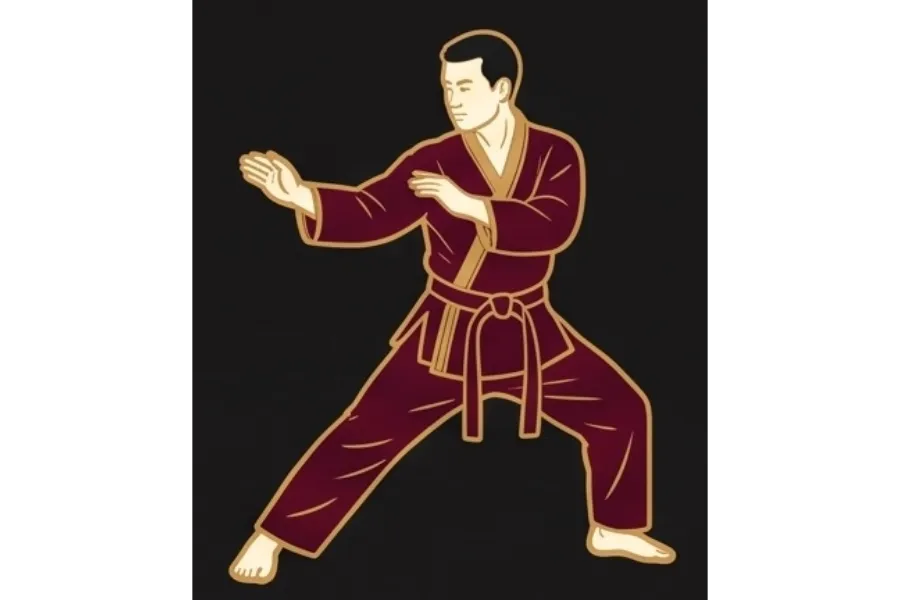
Hapkido
A Korean art combining joint locks and throws with a rich kicking repertoire; aimed at self-defence rather than competition.
South KoreaHarimau Silat
Minangkabau tiger silat from West Sumatra: fighting from low stances and the ground, with the curved karambit knife.
IndonesiaHeki-ryū
The family of branches of Japanese military archery from which most of today''s kyudo descends. The link to Heki Danjō is traditional, not documented.
JapanHEMA
The present-day movement that reconstructs European martial arts from surviving manuscripts and printed manuals.
GermanyHigo Ko-ryu Naginatajutsu
A classical naginata school from the Higo domain; shaft and blade each measure about four feet, a proportion archaic even in the sixteenth century.
JapanHikita Kage-ryu Kenjutsu
Traditional samurai koryu bujutsu school known for fluid fencing and feints.
JapanHojojutsu (Rope Restraint)
The Japanese art of restraining a prisoner with cord, part of official and police training in the Edo period. It has no competition or sparring.
JapanHokushin Ittō-ryū
A school of swordsmanship that cut its ranks from eight levels to three and opened training to the poorer. In 1853–1867 it was among Japan's three largest.
JapanHontai Yoshin-ryu Jujutsu
A Japanese old school of jujutsu from the 17th century, preserved unbroken. It also trains from kneeling and sitting, the ordinary postures of a Japanese house.
JapanHou Quan (Monkey Kung Fu)
A family of Chinese monkey styles with five monkey types; its best documented branch, Da Sheng Men, arose around 1911.
ChinaHozoin-ryu Sojutsu
A Japanese school of spear fighting from Nara. Its spear has a cross-shaped head with two side blades, so it not only thrusts but also catches and cuts.
JapanHozoin-ryu Takada-ha Sojutsu
Notable samurai Hozoin-ryu branch specialized in crescent-bladed spear combat.
JapanHryggspenna Glima
Raw traditional Icelandic Glima variant with two-handed grip around the torso.
IcelandHuaquan (China Flourishing Boxing)
A northern Chinese long-fist style built on three qualities: spirit, breath, and internal power. Today a core part of competitive changquan.
ChinaHuka-Huka
Wrestling of the Upper Xingu, fought from the knees. Its main setting is the kuarup funerary festival, where not only individuals but villages compete.
BrazilHung Gar
One of the five great family styles of southern Chinese kung fu, known for its deep horse stance. The documented lineage begins in the nineteenth century with the Wong family.
ChinaHung Sing Choy Li Fut
The fighting branch of Choy Li Fut, founded in Foshan in 1851 by Jeong Yim. It trained Taiping rebels and builds on unbroken combinations of strikes.
ChinaHuo Style Bajiquan
A branch of bajiquan after Huo Diange, personal bodyguard of China's last emperor. Built on the stomping step, elbow, and shoulder at close range.
ChinaHwa Rang Do
A Korean system from the 1960s with four divisions — technique, internal work, weapons and healing. The hwarang lineage is tradition, not history.
South KoreaIaido
The Japanese art of drawing the sword, practised solo. Everything rests on a single continuous motion from scabbard through the cut and back to the scabbard.
JapanInayan Eskrima
Philippine Eskrima system developed by Mike Inay focused on 3 distinct ranges.
PhilippinesInbuan (Mizo Wrestling)
The Mizo wrestling of Mizoram in which bending the knees is forbidden; the winner lifts his opponent clear of the ground.
IndiaInuit Wrestling
A set of Inuit strength and grappling games from Greenland to Alaska. They prepared hunters and are today staged at the Arctic Winter Games.
Greenland Greenland
Irish Bare-Knuckle Boxing
The Irish bare-knuckle tradition, documented in the nineteenth-century prize ring and still alive as an unorganised Traveller custom.
IrelandIron Palm Kung Fu
A method of conditioning the palm, not a martial art in itself. The aim is not a hard hand but the ability to transmit force through the target.
ChinaIsshin-ryu Karate
An Okinawan style founded in 1956 by Tatsuo Shimabuku. It is known for the vertical fist with the thumb on top and for blocks made with muscle, not forearm bone.
JapanIsshin-ryu Kusarigamajutsu
Traditional samurai koryu bujutsu school specialized in sickle and chain Kusarigama combat.
JapanIstunka (Somali Stick Fighting)
A Somali stick-fighting festival in Afgooye. It is not individuals in a bracket who fight, but the people of the two riverbanks against each other.
Somalia Somalia
ITF Taekwondo
The older of taekwondo's two main branches, founded in 1966 by General Choi Hong-hi. It has its own patterns — twenty-four tul — and more hand technique.
South KoreaIwama Ryu
The aikido line of Iwama carried by Morihiro Saito. It trains empty-hand technique together with sword and staff as a single whole.
Japan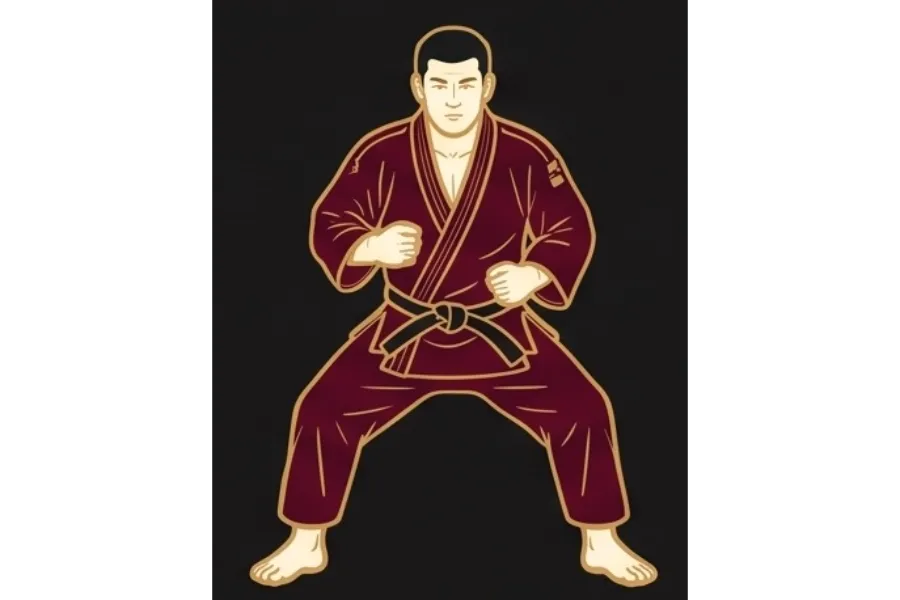
Jeet Kune Do
Bruce Lee's system from the late 1960s, rejecting closed styles. He started from wing chun but concluded that any fixed system is a limitation.
United StatesJigen-ryū
A school of swordsmanship from Satsuma built on a single idea: the first strike must be enough. A second, by its doctrine, is not even to be considered.
JapanJikishin Kage-ryu Kenjutsu
Traditional samurai koryu bujutsu school famed for heavy Suburi-to wooden sword and breath control.
JapanJikishin-ryu Jujutsu
Traditional samurai koryu bujutsu school that historically first used the term Judo.
JapanJikishinkage-ryū Naginatajutsu
The second of the two classical naginata schools. Created in the 1860s by the Satake husband and wife; modern naginata derives from it and Tendō-ryū.
JapanJittejutsu (Art of the Jitte)
Japanese art of fighting with the short iron rod jitte, with which Edo-period guards caught a sword blade and restrained an armed man without killing him.
JapanJodo
The Japanese art of the short staff against the sword. Modern seitei jodo has twelve kata, compiled by Shimizu Takaji for the ZNKR in 1968.
JapanJōdō (Modern Way of the Staff)
The modern form of staff against sword: twelve standardised kata under the All Japan Kendo Federation, studied alongside the original koryū.
JapanJogo do Pau (Portuguese Stick Fighting)
The Portuguese art of the long staff from the north of the country; its hallmark is fighting one against several.
Portugal Portugal
Jow Ga Kuen
A southern Chinese family style founded by Jow Lung. It joins the power of Hung Ga to the footwork of Choy Gar and the reach of northern Shaolin.
China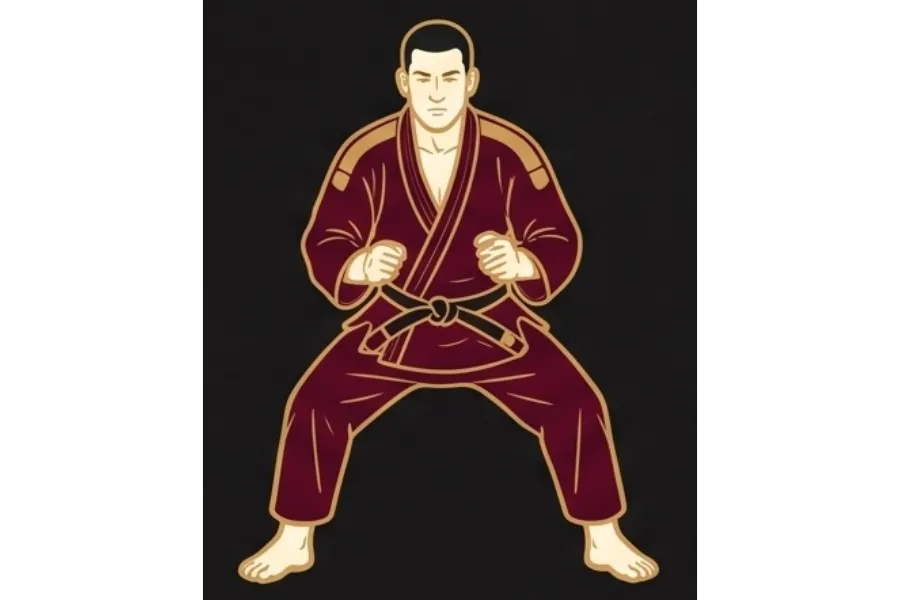
Judo
A Japanese art of throws and grappling, Olympic since 1964; its idea is to use the opponent's strength instead of your own.
JapanJuego de Mani
A Cuban combat dance of African origin from the sugar plantations. Today it is kept alive mainly by folkloric ensembles, not fighting clubs.
Cuba Cuba
CubaJuego del Garrote
Venezuelan walking-stick fighting art from the state of Lara, tied to the Tamunangue festival and the tradition of the garroteros.
Venezuela Venezuela
Juego del Palo (Canarian Stick Fighting)
Canarian stick fighting descended from the Guanche tradition. Blows are delivered under control, not at full force: precision decides, not impact.
SpainJukendo (Japanese Bayonet Art)
The Japanese art of bayonet fighting; it trains with the wooden mokuju rifle and targets the heart, throat and left side.
JapanJundokan Goju-ryu
An Okinawan Goju-ryu dojo opened in Naha by Miyagi's direct student Ei'ichi Miyazato, known for transmitting kata without sport modifications.
JapanK-1 Kickboxing
A Japanese kickboxing format from 1993 in which representatives of different striking styles met under shared rules. It was not an art but a competition brand.
JapanKaad Chuek (Rope-Bound Muay)
The form of muay in which the hands are bound with hemp rope instead of gloves. It precedes sporting muay thai and survives in demonstrations and special divisions.
Thailand Thailand
Kabaddi
A South Asian contact team sport: the raider must touch opponents without drawing breath and get back over the midline.
IndiaKabaroan Eskrima
Traditional Philippine fencing school with long rattan staff and sword from Ilocos.
PhilippinesKadochnikov Systema
Russian close-combat system built on mechanics: leverage, centre of gravity and momentum instead of strength and speed.
RussiaKajukenbo
The first martial art created on American soil as a deliberate blend of five schools. It took shape in 1947–1949 in Hawaii, where five masters of different systems met.
United StatesKalaripayattu
The art of Indian Kerala, joining acrobatics, weapons work and knowledge of vital points with Ayurveda. Banned by the British in 1804, it survived in hiding.
IndiaKalinda (Caribbean Stick Fighting)
Caribbean stick fighting of African origin, at home in Trinidad. Drumming and a lead singer, the chantwell, accompany it; calypso grew from its chants.
Trinidad & Tobago Trinidad & Tobago
Kapap
The older Israeli close-combat system, a predecessor of Krav Maga. It emerged in the late 1930s in the Haganah and the Palmach.
IsraelKapu Kuialua (Lua)
Secret ancient Hawaiian martial art focused on bone breaking and joint locks.
United StatesKarakalpak Kuresi
Traditional Central Asian belt wrestling of the Karakalpak people near the Aral Sea.
Uzbekistan Uzbekistan
Karakucak Wrestling
Turkish folk wrestling on grass, the second recognised style beside the oiled one. The key difference: oiling the body or the garment is forbidden.
Türkiye Türkiye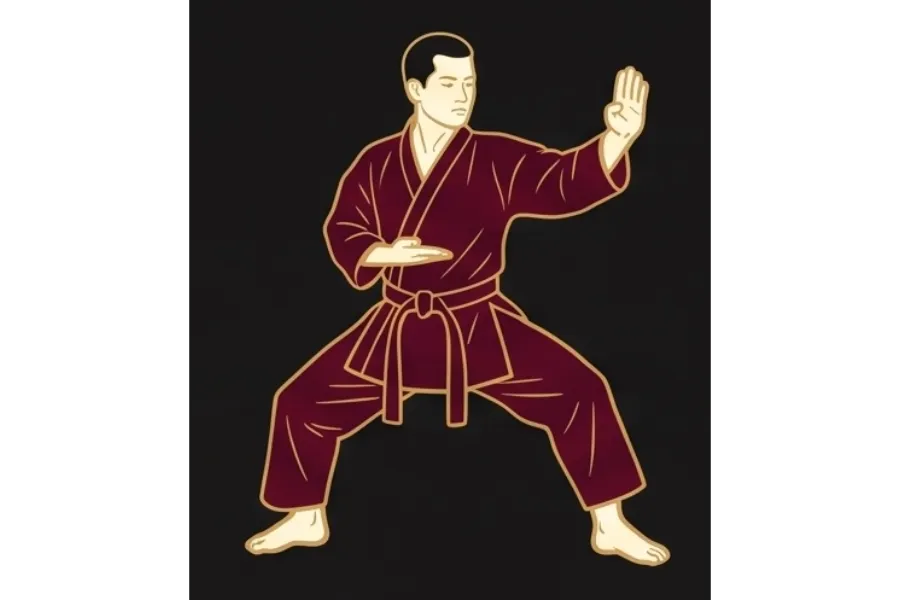
Karate
An Okinawan striking art reshaped in the 20th century into Japanese budo and an Olympic sport. Built on kata and hand and foot techniques.
JapanKasagake
Japanese mounted archery focused on technique rather than ceremony. Against yabusame it has freer targets, freer dress and continuous shooting during the ride.
JapanKashima Shin-ryu
A Japanese old school of the sword from the Kashima shrine. It teaches not a collection of techniques but principles of movement from which techniques derive.
JapanKashima Shinto-ryu
A Japanese school of the sword associated with Tsukahara Bokuden. His best-known victory came without a weapon: he left his opponent on an islet and rowed off.
JapanKasumi Shinto-ryu Kenjutsu
Traditional samurai koryu bujutsu school famed for deceptive 'mist' fencing and parries.
JapanKatar Combat (Indian Push Dagger Fencing)
Traditional Indian martial art of fencing with the perpendicular Katar push dagger.
IndiaKattasamu (Indian Sword Fencing)
Traditional armed martial art from Andhra Pradesh specialized in sword and shield fencing.
IndiaKawaishi Judo
A method of teaching judo for Europe: techniques in numbered series, in a fixed order. Created by Mikinosuke Kawaishi, who arrived in Paris in 1935.
JapanKbach Kun Boran Khmer
Ancient comprehensive Cambodian martial art including forms, strikes, wrestling and weapons.
Cambodia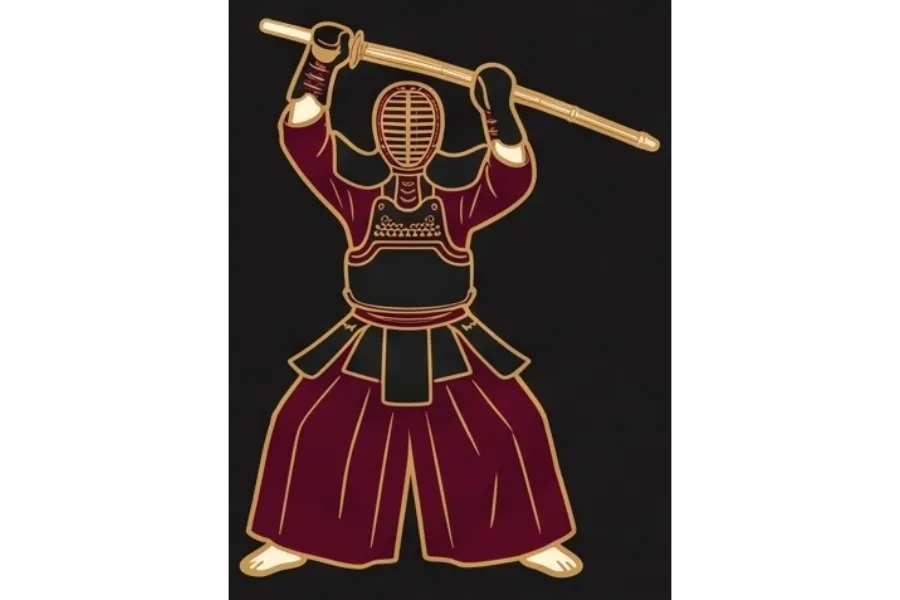
Kendo
Japanese swordsmanship with a bamboo sword in full protective armour; a direct continuation of the samurai art of the sword.
JapanKene (Naga Folk Wrestling)
Traditional belt folk wrestling sport of the Tenyimi tribe from Nagaland, India.
IndiaKenpo Karate
Ed Parker's American system from the 1950s. It builds not on one strong strike but on a rapid series of hand contacts from a higher, mobile stance.
United StatesKeysi Fighting Method
A Spanish self-defence system for close quarters and against several attackers. Its "pensador" guard is familiar to viewers from the Batman films.
SpainKhridoli (Georgian Martial Art)
A collective name for five Georgian martial disciplines brought together by a national federation since 1993. Not one school but an assembly of traditions.
GeorgiaKhuresh
Tuvan wrestling from Siberia. Whoever touches the ground with anything above the knee loses, and the wrestler dances the eagle's flight before and after.
Russia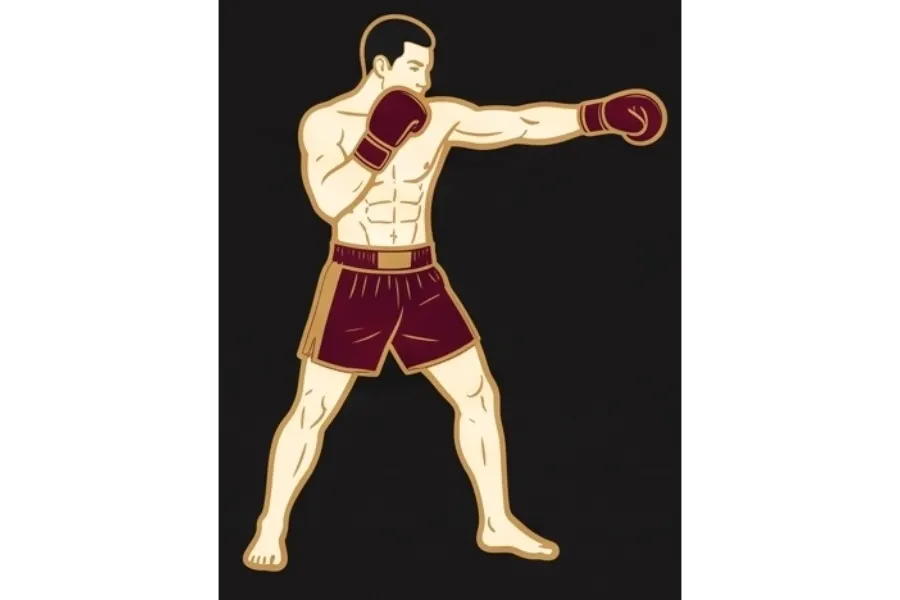
Kickboxing
A striking sport joining boxing hands with kicks. It appeared in the 1960s and 1970s in Japan and the United States at once, from a wish to give karate full contact.
United StatesKing Mui Choy Li Fut
Founding lineage branch of Choy Li Fut style from King Mui village.
ChinaKinomichi
The way of energy, created in Paris in 1979 by Masamichi Noro, a direct student of Ueshiba: paired movement with no attacker or defender.
FranceKiripolu (Sri Lankan Wrestling)
Sri Lankan wrestling forming the grappling strand of angampora. The British banned martial arts practice in Ceylon in 1817, so much of the tradition was lost.
Sri Lanka Sri Lanka
Kito-ryu
A Japanese jujutsu school of the early Edo period. It rests on throws and breaking balance; from it Kano drew judo'"'"'s koshiki no kata.
JapanKokh
Armenian traditional wrestling in which every bout opens with a dance; eight-minute matches, Lori and Shirak variants.
Armenia Armenia
Komagawa Kaishin-ryu
A sixteenth-century Japanese sword school of the Shinkage-ryu line; only the headmaster may teach, so the kata do not drift.
JapanKombatan (Presas Arnis)
Ernesto Presas's Filipino system joining stick, sword and dagger, knife and empty hand in one scheme of angles.
PhilippinesKoresh (Tatar Belt Wrestling)
Traditional belt wrestling of Tatarstan and Turkic peoples of the Russian Federation.
RussiaKoryu Bujutsu
An umbrella term for the Japanese combat schools founded before 1868. It is not a style but the dividing line between the old schools and modern ways such as judo or kendo.
JapanKosen Judo
A branch of judo defined by its rules, arising around 1914 at Japanese technical schools. With no limit on groundwork, the emphasis shifted from throws to newaza.
JapanKoshiki Karatedo
A competition form of karate in Super Safe protective armour. It allows full contact including head strikes without the injury risk of bare bouts.
JapanKoto-ryu Koppojutsu
A Japanese koppojutsu school among the nine Bujinkan traditions; short strikes to bones and joints and low kicks.
JapanKrabi-Krabong
The Thai art of armed combat, which in tradition comes before empty-hand fighting. Its signature is the paired daab swords; training is accompanied by drums, as in muay thai.
Thailand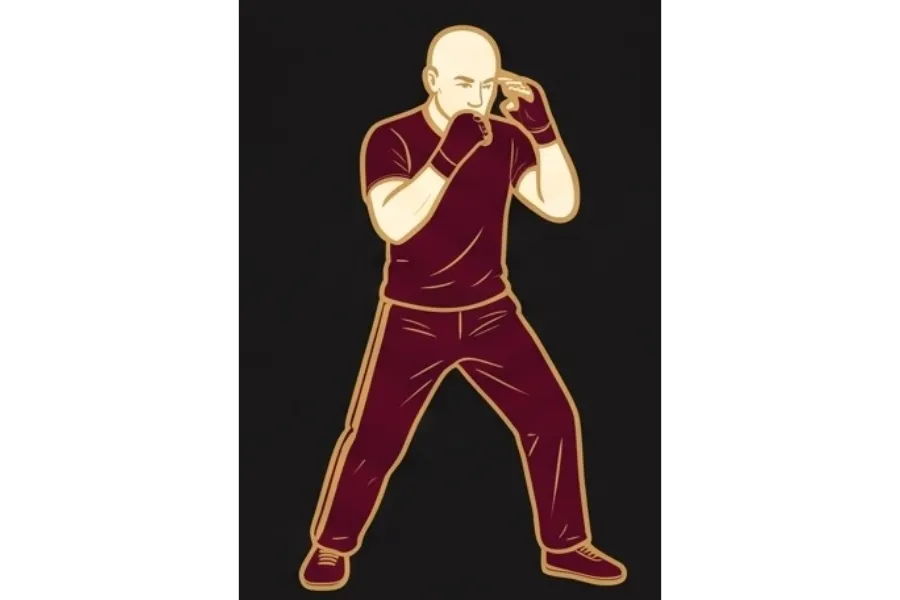
Krav Maga
An Israeli self-defence system aimed at fast, simple responses to real danger rather than at competition.
IsraelKudo
A Japanese full-contact art from 1981. It allows head strikes thanks to a helmet with a plastic shield and adds the competitor's height to the weight class.
JapanKuk Sool Won
Comprehensive Korean traditional martial art system combining tribal, monk and royal styles.
South KoreaKukishin-ryu Bojutsu
Traditional samurai koryu bujutsu school specialized in six-foot Rokaku Bo staff combat.
JapanKukishin-ryu Happo Bikenjutsu
A Japanese comprehensive school covering eight weapon sections. Several independent lines now bear the name, so one must always establish which is meant.
JapanKukishinden-ryu Happo Bikenjutsu
Historical samurai lineage school specialized in long Bo staff, spear and sword combat.
JapanKumdo
The Korean form of bamboo-sword fencing, in practice identical to kendo. It arrived under Japanese administration and became independent under a Korean name after 1945.
South KoreaKun Khmer (Pradal Serey)
Cambodian ring boxing of elbow and knee. It belongs to the same family as muay thai and lethwei; the dispute over their mutual origin has no clear answer.
Cambodia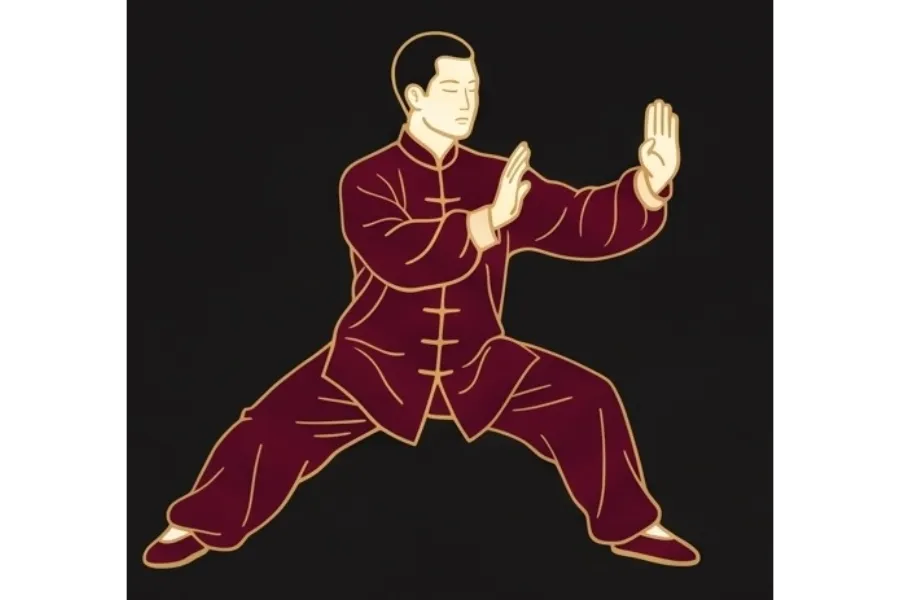
Kung Fu
The collective name for hundreds of Chinese fighting traditions. It has no founder: Bodhidharma is a legend spread only from the early 20th century.
ChinaKuntao (Kuntao)
Umbrella term for Chinese martial arts in Indonesia and Malaysia. Not a single style; it often blends with silat into kuntao silat.
IndonesiaKuntaw
Filipino art of hard and soft techniques that gained status as the national art in 1974. Its weapon is the arnis stick.
PhilippinesKurama-ryu Kenjutsu
Traditional samurai koryu bujutsu sword fencing school from Mount Kurama.
JapanKurama-ryu Sojutsu
Traditional samurai koryu bujutsu school specialized in Yari long spear combat.
JapanKurash
Central Asian jacket wrestling, at home in Uzbekistan. It is fought strictly standing, with no locks and no chokes; the referee's commands remain in Uzbek.
UzbekistanKuttu Varisai (Unarmed Tamil Combat)
Unarmed component of ancient South Indian Silambam focused on strikes and kicks.
IndiaKyokushin
The hardest of the major karate styles: fought at full contact without protectors, but with no punches to the head. Founded by Masutatsu Oyama in 1964.
JapanKyokushin Budokai
Dutch hybrid Kyokushin branch combining full-contact strikes with Judo throws.
NetherlandsKyudo
The Japanese way of the bow. Unlike sport archery, the whole process of the shot is judged; the hit is its consequence, not its aim.
JapanKyujutsu (Combat Archery)
The collective name for pre-modern Japanese combat archery. It differs from kyudo in purpose: hitting in battle, not form and inner discipline.
JapanKyushin-ryu Jujutsu
Jūjutsu from the mid-sixteenth century known for strikes to vulnerable points and resuscitation techniques. It left a mark on both judo and bartitsu.
JapanKyusho Jitsu (Pressure Point Art)
Modern and traditional art of striking sensitive anatomical nerve points of the human body.
JapanLa Verdadera Destreza
The Spanish school of rapier fencing, founded in 1582 by Jerónimo Sánchez de Carranza. The fencer stands upright and moves along an imaginary circle.
SpainLadja (Danmyé)
The combat dance of Martinique, kin to capoeira. The fight takes place in a ring to the beat of a drum; the rhythm decides what may happen there.
Martinique Martinique
Lameco Eskrima
A Filipino system of stick and knife fighting based on three ranges: largo, medio and corto. Edgar Sulite built it from training under several eskrima masters.
PhilippinesLathi Khela
Bengali fighting with a bamboo staff. Its practitioners were not sportsmen but the landowners'' guards — and with the end of the zamindari system they lost their employers.
Bangladesh Bangladesh
Lau Gar
A southern Chinese family style, one of the five traditional southern lines. Its documented history starts in Britain in 1961, where it is now the most practised kung fu.
ChinaLausatok Glima (Loose-Grip Glima)
Traditional Viking Glima wrestling variant without belts using loose grips.
IcelandLerdrit
The military form of Thai fighting used by the Thai army. It builds on muay thai but aims at taking an opponent out at once, not at scoring in a ring.
ThailandLethwei
Burmese bare-knuckle boxing in which headbutts are also allowed. Traditional rules recognise neither points nor decisions — a bout ends only by knockout or a draw.
Myanmar (Burma)Li Gar
One of the five family styles of southern China. It joins the firm southern fist to northern agility and is known for the long staff and leg work.
ChinaLi Style Tai Chi
Traditional Chinese Tai Chi family lineage combining Wu, Yang, Baji and Shuai Jiao.
ChinaLiang Style Baguazhang
The baguazhang line from Dong Haichuan's youngest disciple; eight mother palms and an unusually wide weapons repertoire.
ChinaLianhuanquan (Continuous Chain Boxing)
Traditional Shaolin kung fu style characterized by an unbroken chain of explosive strikes.
ChinaLiba (Congolese Traditional Wrestling)
Traditional folk wrestling sport practiced on sandy beaches in the Congo basin.
Congo - Brazzaville Congo - Brazzaville
Limalama
A Polynesian martial system assembled in California by Samoan-American Tino Tuiolosega, blending dance movement, boxing, kung fu and judo.
United StatesLINE System (Linear In-Fighting)
The US Marine Corps close-combat system of 1989. Built on gross motor skills and a lethal finish; discontinued in 1998 and replaced by MCMAP.
United StatesLiu He Ba Fa (Water Boxing)
An internal style known as water boxing. The movement advances in waves that never stop; its documented history begins only with Wu Yihui in the 20th century.
ChinaLiu He Quan (Six Harmonies Boxing)
Northern Chinese traditional martial art based on coordination of 6 harmonic forces.
ChinaLiuhebafa
An internal Chinese style known as "water boxing". Tradition places its origin in the Song era, but its documented history begins with Wu Yihui in the 20th century.
ChinaLondon Prize Ring Rules
The 1838 rules of the bare-knuckle prize ring. A round ended with a knockdown, rounds were unlimited, and a bout ran until a man failed to toe the line.
United KingdomLotta Campidanese
Traditional Southern Sardinian belt wrestling practiced during harvest festivals.
ItalyLucha Leonesa
Traditional Spanish folk wrestling from León province in leather belts.
SpainLucha Libre
The Mexican form of professional wrestling and a cultural phenomenon in its own right. It took shape in the 1930s; the mask carries the character's identity, and losing it ends the persona.
Mexico Mexico
Lucha Pasiega (Cantabrian Wrestling)
Traditional folk wrestling style from the mountain valleys of Cantabria, Spain.
SpainLung Ying (Southern Dragon)
A southern Chinese style of the Hakka region, spread by Lam Yiu-gwai. It works at shortened range and changes body height instead of stepping aside.
ChinaLuta de Galo (Cape Verdean Folk Wrestling)
Traditional Afro-Portuguese folk wrestling sport from Cape Verde performed in crouch.
Cape Verde Cape Verde
Luta Galega (Galician Wrestling)
Traditional Celtic-Galician folk wrestling in northwestern Spain.
SpainLuta Livre
Brazilian no-gi grappling built on submissions and control of the opponent on the ground. It was started in Rio in the 1920s and 1930s by Euclydes Hatem, known as Tatu.
BrazilLuta Livre Esportiva
The sport branch of Brazilian luta livre: no-gi grappling decided by submission or position, with strikes excluded.
BrazilLuta Livre Vale Tudo
Full-contact complete fighting branch of Luta Livre with strikes, kicks and leg locks No-Gi.
BrazilLuta Marajoara (Marajó Island Wrestling)
Traditional Brazilian indigenous mud wrestling style originating from Marajó Island in Amazonia.
BrazilLutte Contact (French Contact Wrestling)
Modern French full-contact hybrid sport combining wrestling, kicks and strikes.
FranceLutte Parisienne (Parisian Wrestling)
Historical French folk wrestling form with belt and clothing grips in the 19th century.
FranceMachete Colombiano (Colombian Machete Fencing)
Traditional folk system of machete fencing from rural areas of Colombia.
Colombia Colombia
Maculele
An Afro-Brazilian stick dance from Bahia, today part of the capoeira school programme. It is danced in pairs to the atabaque rhythm.
BrazilMalla-yuddha
Ancient Indian wrestling described in the Mahabharata, divided into four kinds from purely points-based to limb-breaking. It merged with the Persian tradition into today's kushti.
IndiaManiwa Nen-ryu
A Japanese school of 1591 kept alive by a single village for generations; it trained in protective gear long before kendo.
JapanMaphilindo Silat
Tactical hybrid Silat system created by Dan Inosanto honoring Southeast Asia.
United StatesMardani Khel (Maratha Martial Art)
The armed art of Maharashtra; its hallmarks are the patta, a sword with a gauntlet for a hilt, and the corded lance vita.
IndiaMas-Wrestling
A Yakut strength sport: two opponents sit facing each other, brace their feet on a board and pull against a wooden stick. Registered as a sport in Russia in 2003.
RussiaMatayoshi Kobudo
The Okinawan kobudo line with the widest armoury, working with some twenty weapons. The father gathered them; the son made a system of them.
JapanMatsubayashi-ryu
A branch of Shorin-ryu from 1947. Its name joins Matsumura and Matsumora, that is Shuri-te and Tomari-te. The stances are naturally high and the movement economical.
JapanMau rākau
Maori fighting with traditional weapons: the long taiaha, the short jade mere. Revived in the nineteen-eighties after a century's decline.
New Zealand New Zealand
Mau rākau (Māori Weaponry)
The Maori art of weapon fighting, properly called mau rakau; the taiaha is one of its weapons. Both ends of the staff are used — the point thrusts, the flat blade strikes.
New ZealandMbapat (Traditional Senegalese Wrestling)
Traditional rural Senegalese sand wrestling without punches performed at night.
Senegal Senegal
MCMAP (Marine Corps Martial Arts Program)
The training programme of the United States Marine Corps, introduced in 2001. It joins close combat with training in character and decision-making, and is mandatory for every Marine.
United StatesMeibukan Goju-ryu
The Okinawan branch of Goju-ryu founded in 1952 by Meitoku Yagi. It added its own set of kata named after the four guardians.
JapanMeifu Shinkage-ryū (Shuriken Throwing)
A modern Japanese blade-throwing school derived from the shurikenjutsu of Katori Shintō-ryū. Its throw is shorter, faster, and harder to read.
JapanMeihuaquan (Plum Blossom Fist)
A rural northern Chinese style with its own doctrinal branch. It rests on five postures and the walking between them, and played a role in the 1900 Boxer Uprising.
ChinaMensur (Academic Fencing)
The ritual fencing of German and Austrian student fraternities, practised since the sixteenth century. It has no points and no victor — it is a test of character, not a contest.
GermanyMerpati Putih Silat
Javanese silat from 1963 built on breath work, breaking, and getaran - vibration perception also taught to the blind.
IndonesiaMeyer's Art of Fencing
Renaissance German fencing based on Joachim Meyer's printed 1570 manual, today one of the most widely practiced branches of HEMA.
GermanyMgba (Igbo Wrestling)
Traditional ritual wrestling of the Nigerian Igbo tribe famous from Chinua Achebe's novel.
NigeriaMianquan (Cotton Boxing)
Fluid Chinese martial art combining soft guidance with hard striking.
ChinaMilidhani (Kenyan Stick Fighting)
Traditional Kenyan martial art of wooden stick fencing used for herd defense.
Kenya Kenya
KenyaMilitary Krav Maga
The army version of Krav Maga in the Israel Defense Forces. Unlike the civilian form, it assumes attack, a weapon and a mission to complete.
IsraelMizongyi (Lost Track Boxing)
A northern Chinese style built on deliberate unpredictability of movement. It was made famous by Huo Yuanjia, founder of the Jingwu association in Shanghai.
China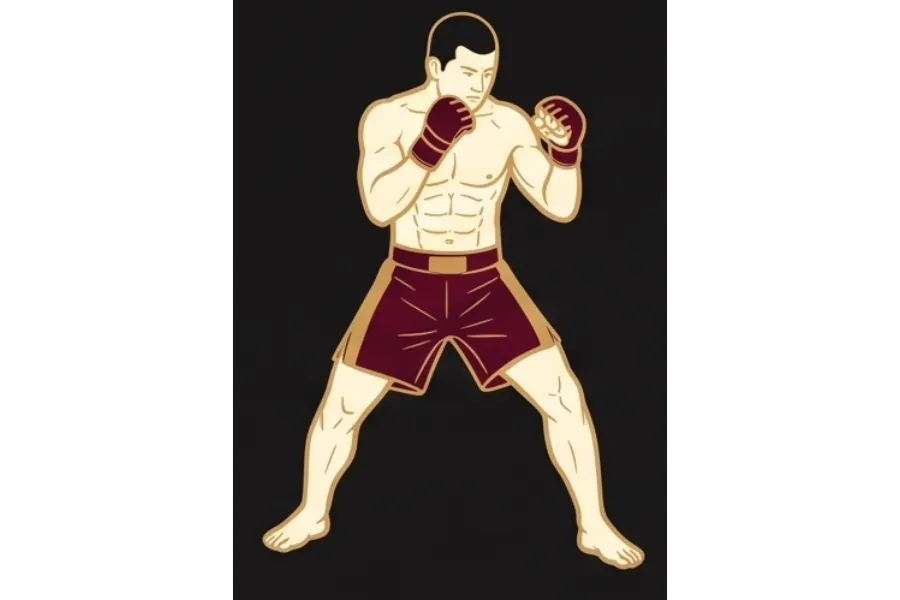
MMA
A full-contact sport combining strikes, throws and ground fighting; today the most widely followed fighting format in the world.
United StatesModern Army Combatives (MACP)
The US Army close-combat system from 1995. Its author staked everything on the manner of training mattering more than the number of techniques.
United StatesModern Arnis
A Filipino stick-fighting system that Remy Presas arranged so it could be taught in a school class. The movement stays the same with or without the stick.
PhilippinesMok Gar
One of the five great family styles of southern China. It fights at a range so close that it is said to be chest to chest, breath to breath.
ChinaMoraingy (Malagasy Bare-Knuckle)
Madagascan bare-knuckle boxing with kicks, at home among the Sakalava of the west coast. It is not a tournament but an event — fought at festivals, to singing and drums.
Madagascar Madagascar
Motobu Udundi (Motobu Palace Art)
Palace art of Okinawa's noble Motobu family, with joint locks, throws, sword and spear. Not a school of karate, though the two merged organizationally after the war.
JapanMotobu-ryu Karate
The name covers two different arts: the karate of Motobu Choki, built on the Naihanchi kata, and the palace art Motobu Udundi, which is not karate at all.
JapanMuay Boran
The collective name for Thai boxing before the sporting reform of the 1920s and 1930s. Hands were bound with hemp rope; there was no ring, no rounds, no weight classes.
ThailandMuay Chaiya
The southern Thai branch of muay boran. It is known for a very tight guard in which the body forms a closed shape; it fights from defence and counters.
ThailandMuay Korat
One of the four regional styles of muay boran, from the Nakhon Ratchasima area. It is known for the power of wide-angle strikes thrown from long range.
ThailandMuay Lao
Traditional Lao full-contact kickboxing with ancient roots in Southeast Asia.
Laos Laos
LaosMuay Lopburi
The oldest of the four muay boran circles, linked to the Mon of Dvaravati. It builds on speed and mobility rather than on power, unlike the Korat school.
ThailandMuay Pram
Traditional Thai art of clinch wrestling and takedowns.
Thailand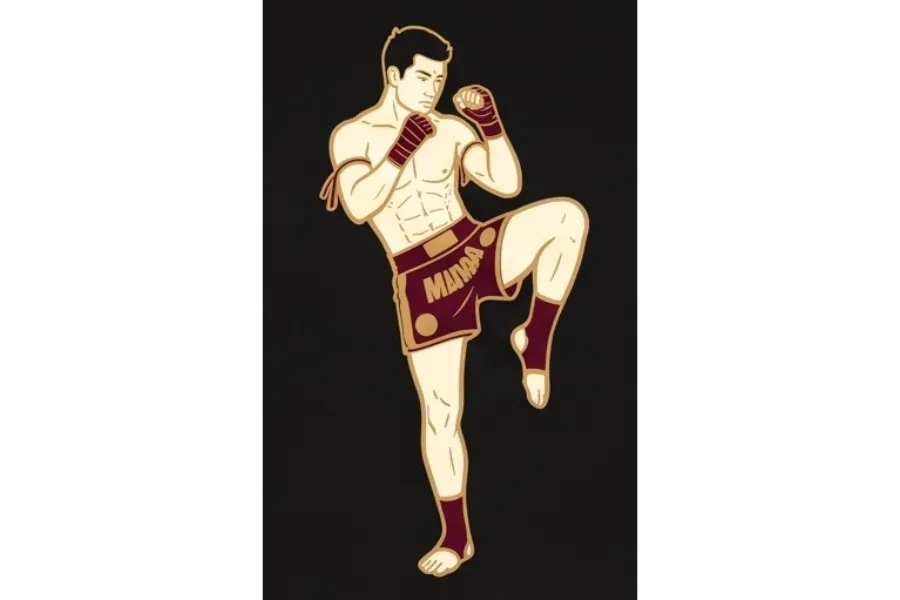
Muay Thai
Thai boxing, the art of eight limbs — fists, elbows, knees and shins, complemented by clinch work. It moved into the ring in the early twentieth century.
ThailandMuay Thai Sangha
Traditional holistic school of Muay Boran and self-defense famous for fluid movement.
ThailandMuay Thasao
Northern branch of traditional Muay Boran famous for incredible speed and kicking flexibility.
ThailandMukna
Meitei folk wrestling from Manipur, India: grip the ningri belt, and win by putting the opponent's back on the ground.
IndiaMusangwe (Venda Bare-Knuckle Fighting)
The Venda bare-knuckle contest in Limpopo; fought at Christmas with no gloves, and winning brings no prize at all.
South Africa South Africa
Muso Jikiden Eishin-ryu
One of the principal schools of iaido, with more than forty forms. It is named after Hasegawa Eishin, who around 1700 adapted the teaching to carrying the sword through the belt.
JapanMuso Shinden-ryu
One of the two most widespread modern schools of iaidō. It was codified in 1932 by Nakayama Hakudō from the Shimomura branch of Hasegawa Eishin-ryū.
JapanMusti-yuddha (Ancient Indian Boxing)
The ancient Indian art of the fist, attested in the classical texts and at home in Varanasi. As a living practice it has effectively died out — no manual or complete system survives.
IndiaNaban (Burmese Wrestling)
Traditional Myanmar (Burmese) wrestling system focused on takedowns and ground locks.
Myanmar (Burma)Naha-te
One of the three Okinawan local traditions from which karate grew. It is not a school with a founder; Gōjū-ryū and Uechi-ryū follow from it.
JapanNakamura-ryu Battodo
A modern Japanese school of drawing and cutting with the sword, derived from the army Toyama-ryu. Its core is eight cuts and test cutting.
JapanNanbudo
Japanese art founded by Yoshinao Nanbu in 1978, created in southern France out of his earlier school Sankukai.
JapanNanquan (Southern Fist)
The collective label for the southern Chinese styles; low stances, short range and vocal exhalation, and today a wushu event.
ChinaNegishi-ryu Shurikenjutsu
The last surviving Japanese school for which blade-throwing is the main subject. The nail-shaped bō-shuriken is thrown in a straight flight without rotation.
JapanNguni Stick Fighting
The South African stick fighting of the Nguni peoples. Herd boys learn it from childhood, and it is today part of wedding ceremony.
South AfricaNhat Nam
Vietnamese art unified from 1983 by Ngô Xuân Bính out of Thanh Nghệ traditions; strong in Russia and Belarus.
VietnamNifo Oti Combat (Samoan Tooth of Death)
Traditional Samoan martial art with the hooked tooth-of-death war knife Nifo Oti.
Samoa Samoa
SamoaNihon Tai Jitsu
A French self-defence system derived from Yoseikan budo. It was formalised by Roland Hernaez after the death of Jim Alcheik.
France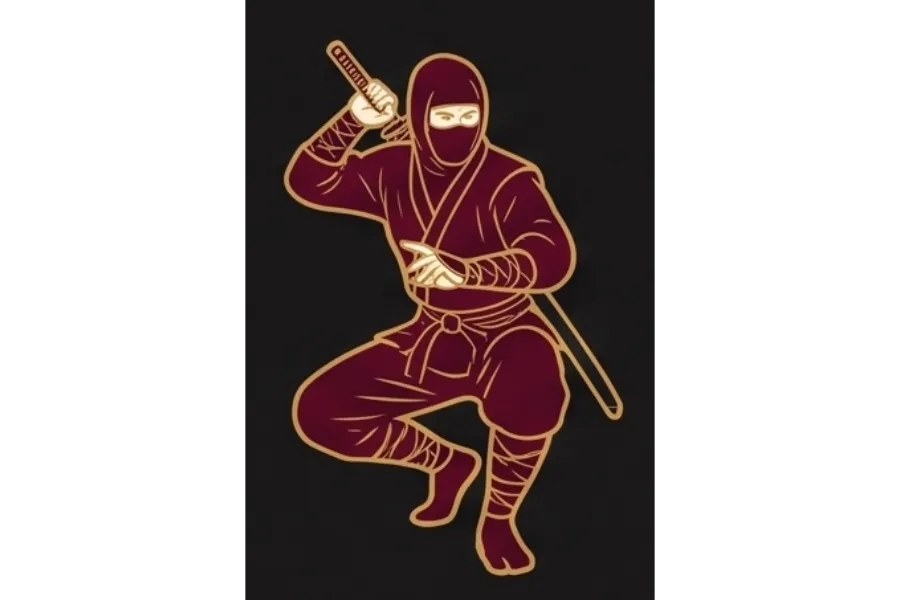
Ninjutsu
A Japanese system drawing on old ryuha, combining unarmed combat, weapons and movement in terrain; its historical continuity is disputed.
JapanNippon Kempo
A Japanese full-contact system of 1932 that added strikes and throws to kendo's bogu armour. The first Japanese format in which the head could be struck at full force.
JapanNiten Ichi-ryu
Miyamoto Musashi's seventeenth-century school, teaching combat with two swords at once — the long in one hand, the short in the other.
JapanNiyuddha (Sanskrit term for close combat)
A general Sanskrit term for close combat, not a school or a style. It points to the documented wrestling tradition malla-yuddha and to musti-yuddha.
IndiaNorthern Kalaripayattu
The northern circle of kalaripayattu. It trains in a kalari sunk below ground level, with Ayurveda; weapons are taught before bare-handed fighting.
IndiaNuba Stick Fighting
A ritual seasonal contest with a long stick and a small hide shield in the Nuba Mountains of South Kordofan, Sudan.
Sudan Sudan
SudanNuba Wrestling
The ceremonial wrestling of the Nuba peoples in the Sudanese Nuba Mountains. It is held after harvest, without strikes, the aim being to put the opponent down.
SudanOgasawara-ryu
A Japanese school of mounted archery, horsemanship and etiquette, documented since the Kamakura period. Besides yabusame it teaches nine ways of bowing.
JapanOkichitaw
A modern reconstruction of Plains combat technique, led by George Lépine since 1997. It is built on the weapons of the Cree and Assiniboine nations.
CanadaOkinawa Kenpo
The Okinawan karate style of Nakamura Shigeru; his main contribution is the bogu armour for full-contact sparring.
JapanOkinawan Kobudo
A body of Okinawan weapon schools alongside the empty-hand ti from which karate grew. The commonest weapons are the bo, sai, tonfa and nunchaku.
JapanOkinawan Ti (Okinawa-te)
Original ancient unarmed martial art of Okinawan nobility, direct ancestor of Karate.
JapanOlympic Boxing
The amateur competitive form of boxing, on the Olympic programme since 1904. Shorter bouts, protective gear and different scoring than the professional code.
United KingdomOno Ha Itto-ryu
The principal line of Itto-ryu and one of the two official sword schools of the Tokugawa shogunate. Its core is kiriotoshi — one's own cut along the very line of the opponent's.
JapanPachi Tanglangquan
A fusion of bajiquan and praying mantis boxing created by Taiwanese master Su Yu-chang. Today it is taught more in Europe and the Americas than in China.
ChinaPaika akhada
Odia warrior training of the paikas with the khanda sword and shield, now performed to drumbeats at festivals.
IndiaPak Hok Pai (Tibetan White Crane)
Traditional Tibetan-Chinese kung fu style characterized by long-range strikes and finger jabs.
ChinaPancrase (Hybrid Wrestling)
A Japanese promotion founded in 1993 and one of the first true MMA formats. Closed fists were allowed to the body only; the head could be struck open-handed.
JapanPangamot (Mano Mano)
Philippine unarmed combat system derived from knife and stick movements.
PhilippinesPankration
An ancient Olympic sport joining wrestling and boxing into a single discipline. It entered the Games in 648 BC; today it exists as a modern revived event.
GreecePaochuan (Cannon Boxing)
Traditional Northern Chinese kung fu style characterized by explosive direct cannon strikes.
ChinaPehlwani (Kushti)
The traditional wrestling of the Indian subcontinent, trained in akharas on an earth floor. It arose from indigenous malla-yuddha fused with Persian varzesh-e pahlavani.
IndiaPekiti-Tirsia Kali
A Filipino knife and stick system that, uniquely, does not step away from the line of attack but into it. The Philippine Marine Corps adopted it for close-combat training.
PhilippinesPencak Silat
The collective name for the martial arts of the Malay archipelago — hundreds of schools differing by ethnic group, island and family. On the UNESCO list since 2019.
IndonesiaPencak Silat Beksi
The Betawi silat of Tangerang joining Chinese kuntao and local silat; the name points back to the horse stance.
IndonesiaPencak Silat Cikalong
Traditional Sundanese Pencak Silat style from West Java focused on sensitive touch and counters.
IndonesiaPencak Silat Harimau Minangkabau
The tiger silat of the Minangkabau of West Sumatra; fighting from a deep crouch and from the ground, with the kerambit knife.
IndonesiaPencak Silat Mande Muda
Comprehensive West Javanese Pencak Silat style combining 18 traditional Sundanese lineages.
IndonesiaPerisai Diri
Indonesian silat founded in 1955 in Surabaya. It joined domestic lineages with Chinese Siauw Liem Sie and is taught in standard Indonesian.
IndonesiaPersaudaraan Setia Hati Terate (PSHT)
The largest Indonesian pencak silat organisation, founded in 1922 in Madiun. It reports around seven million members.
IndonesiaPiguaquan (Chop-Hanging Fist)
Northern Chinese style from Cangzhou known for long, flail-like arm swings. Traditionally paired with Bajiquan and the miaodao sabre.
ChinaProfessional Boxing
The professional boxing circuit: longer bouts, no headgear and titles from four major sanctioning bodies. It differs from the amateur code in tactics, not technique.
United StatesQazaq Kuresi
Traditional Kazakh national wrestling in short-sleeved jacket and belt.
Kazakhstan Kazakhstan
Qin Na (Chin Na)
A technical category in the Chinese arts: grips, locks and immobilisations in five groups defined by what is attacked.
ChinaRanggeln (Austrian Alpine Wrestling)
Alpine folk wrestling on grass. The grip is on linen trousers, there are no weight classes, and the winner takes the title of Hogmoar.
Austria Austria
Raramuri Folk Wrestling
Traditional folk wrestling sport of the indigenous Raramuri people from Sierra Madre canyons.
MexicoReal Aikido
A Serbian modern derivative of aikido from 1993, built for police work. It takes away the ritual and adds strikes, ground work and restraint.
Serbia Serbia
Rince an Mhaide (Irish Stick Fighting)
Family Irish fencing school with the knobby oak Shillelagh stick.
IrelandRingen (Medieval German Wrestling)
German wrestling of the 14th to 16th centuries, as important in the fight books as the sword. The sources divide the friendly mode from the serious one, where locks and strikes are allowed.
GermanyRough-and-Tumble Fighting
An extinct American no-rules duel of the eighteenth- and nineteenth-century backcountry. Its signature move was eye-gouging.
United StatesRyuei-ryu
The Okinawan karate of the Nakaima family, taught within the family alone for three generations. It was opened to the public only in 1971.
JapanRyushin Katchu-ryu Kenjutsu
Traditional samurai koryu bujutsu school teaching sword fencing and armored Katchu wrestling.
JapanRyushin Shinto-ryu Iaijutsu
Traditional samurai sword drawing koryu bujutsu system focused on circular strikes.
JapanRyushin Shouchi-ryu
Modern school of traditional Japanese sword fencing and drawing Iaijutsu.
JapanS'Istrumpa (Sardinian Wrestling)
Traditional Sardinian folk wrestling with back and arm grips.
ItalySakalava Moraingy Boxing
Raw traditional coastal branch of Malagasy bare-knuckle boxing.
Madagascar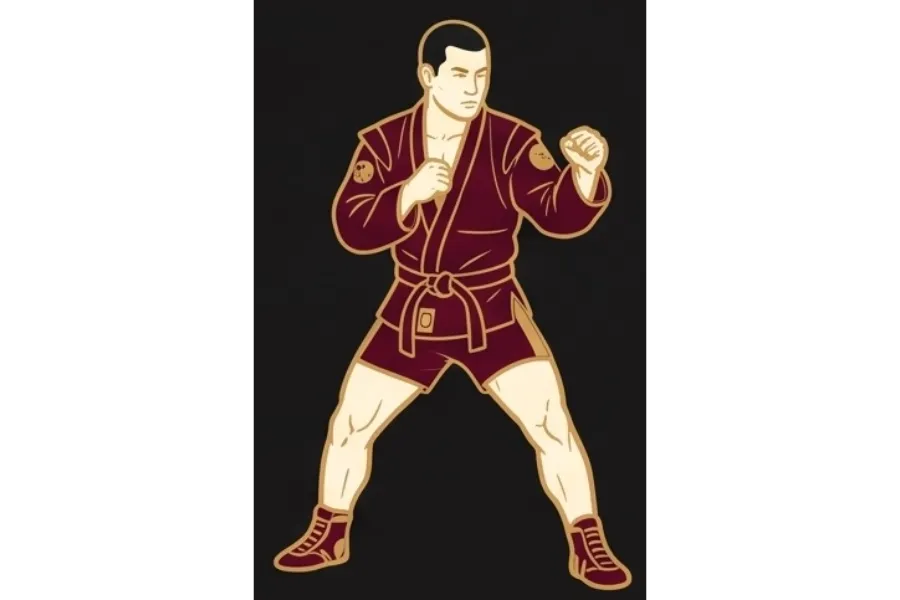
Sambo
A Soviet system of grappling and joint locks combining judo with the folk wrestling of the USSR; the combat version also allows strikes.
RussiaSambo Samooborona (Self-Defense Sambo)
Original self-defense branch of Soviet Sambo focused on soft joint locks and protection.
RussiaSanatan Shastar Vidiya
North Indian weapon art from the Kshatriya tradition, adopted by the Sikh Akali Nihangs in the 17th century. Today it is extremely rare.
IndiaSanhuang Paochui (Three Emperors Cannon Fist)
A northern Chinese cannon-fist style. Strikes fire off like a cannon shot, built on crossing hand work and a deep rider's stance.
ChinaSankukai
A karate style created in France in 1970 by the Japanese master Yoshinao Nanbu. It builds on evasion with a countermove rather than a hard block.
FranceSatojuku Karate
The school of the winner of the very first Kyokushin world tournament in 1975, built on precise knockdown technique rather than sheer endurance.
JapanSavate
French boxing, the only European striking art in which one kicks wearing shoes. It arose in nineteenth-century Paris and Marseille; Charles Lecour joined it with English boxing.
FranceSavate Defense
Modern self-defense module of French Savate combining kicks, locks and stick.
FranceSayoc Kali
A Filipino system built entirely around the blade. Created in 1985 by Christopher Sayoc Sr.; the knife is the starting point, not an addition to the empty hand.
PhilippinesSCARS (Special Combat Aggressive Reaction System)
Official combat system of US Navy SEALs used in the 1980s and 1990s.
United StatesScherma Genovese (Genoese Knife Fencing)
Traditional Northern Italian fencing school with the Genoese knife and stick.
ItalyScherma Lucchese (Lucchese Knife Fencing)
Traditional Tuscan knife and dagger fencing school from the city of Lucca.
ItalySchirmen (Medieval German Fencing)
Historical designation for German fencing martial art with two-handed sword in 14-15th c.
GermanySchoren Wrestling
Alpine variant of traditional Swiss wrestling conducted on sawdust.
SwitzerlandSchwingen (Swiss National Wrestling)
Swiss national wrestling on a ring of sawdust. Competitors grip short canvas breeches; the winner of the greatest festival takes a bull as the prize.
SwitzerlandScottish Backhold Wrestling
Traditional Highland folk wrestling sport with a fixed two-handed back grip.
United KingdomSeidokaikan Karate
Full-contact karate founded in 1980 by Kazuyoshi Ishii. Its main legacy is not technique but the K-1 tournament, which in 1993 set the striking styles against each other.
JapanSeiwakai Goju-ryu
Influential Goju-ryu branch within JKF Goju Kai, founded in 1972 by Shuji Tasaki, a student of Gogen Yamaguchi.
JapanSekiguchi-ryu Battojutsu
Specialized samurai koryu bujutsu branch focused on lightning-fast longsword drawing.
JapanSekiguchi-ryu Jujutsu
One of the oldest Edo-period jujutsu schools; its founder is credited with introducing the systematic practice of ukemi.
JapanSenegalese Wrestling
Senegal'"'"'s national sport in two forms: plain wrestling and wrestling with strikes. You win by putting the opponent on his back, side or both hands.
SenegalSeven Star Praying Mantis
The most widely practised branch of northern praying mantis. It joins hard and soft methods and long attacks with short; its founder is not documented.
ChinaShaolin Quan
The body of styles tied to the Shaolin monastery in Henan. Its martial tradition is documented from the Ming dynasty, when the monks also served as troops.
ChinaShibukawa-ryu Jujutsu
Traditional samurai koryu bujutsu school focused on joint locks and throws in clothing.
JapanShin Muso Hayashizaki-ryu
Founding samurai school of the art of sword drawing (Iaijutsu) from the 16th century.
JapanShinden Fudo-ryu Dakentaijutsu
Ancient samurai koryu bujutsu school focused on natural body movements and strikes.
JapanShindo Jinen-ryu
The Japanese karate of Yasuhiro Konishi, named in 1933. It joins Okinawan karate with jujutsu, kendo and aikido in a single syllabus.
JapanShindo Muso-ryu Jojutsu
The Japanese school of the jō staff and the main root of jōdō. It arose in the early Edo period; its founder's duel with Musashi is legend, not record.
JapanShindo Yoshin-ryu Jujutsu
Major samurai koryu bujutsu school that directly influenced the creation of Wado-ryu Karate.
JapanShinno Shinto-ryu Jujutsu
Traditional samurai koryu bujutsu school focused on vital point striking and joint locks.
JapanShito-ryu
A style founded in 1931 by Kenwa Mabuni, who joined both great Okinawan lineages — Shuri-te and Naha-te. Hence it has more kata than any other major style.
JapanShojitsu Kenri Kataichi-ryu
Traditional samurai koryu bujutsu school specialized in sword fencing and Iaijutsu.
JapanShoot Boxing
A Japanese stand-up ruleset that adds throws and standing submissions to kickboxing. Founded by Caesar Takeshi in 1985; its flagship event is the S-Cup.
JapanShooto
The Japanese forerunner of modern MMA, founded in 1985 by Satoru Sayama. It was assembled from wrestling, sambo, Thai boxing and submissions, with a professional league.
JapanShorei-ryu
A classificatory term rather than a separate school. Funakoshi used it for the heavier, slower current of Okinawan karate as against the lighter Shorin-ryu.
JapanShorin-ryu
A family of Okinawan lineages descending from Shuri-te. The name points to Shaolin, but that is a claim to the tradition, not evidence of a direct line.
JapanShorin-ryu Kyudokan
An Okinawan branch of Shorin-ryū founded by Higa Yuchoku in Naha, practiced with protective gear and contact deliberately kept below full power.
JapanShorin-ryu Seibukan
An Okinawan school from 1962 that keeps Chotoku Kyan's line most faithfully. It brought no new doctrine but preserves karate as it looked before the war.
JapanShorin-ryu Shidokan
Katsuya Miyahira's Okinawan branch of Kobayashi Shorin-ryu: high stances, light movement and explosive power, dojo from 1948.
JapanShorin-ryu Shorinkan
The Okinawan branch of karate founded in 1975 by Nakazato Shugoro, a student of Chibana Choshin of the Kobayashi line.
JapanShorinji Kempo
A Japanese art founded in 1947 by Doshin So. From the outset it was conceived not as a sport but as a means of rebuilding people in post-war Japan.
JapanShorinji Ryu Renshinkan
An Okinawan lineage transplanted to Kagoshima in 1955, which pioneered fighting in bogu protective gear before that was common in karate.
JapanShorinji-ryu Kenkokan
Kori Hisataka's Japanese karate from 1945: the vertical fist, a heel kick and full-contact sparring in protective armor.
JapanShotokan
The most widespread style of karate, recognisable by long low stances and direct technique. It was founded by Gichin Funakoshi, who brought karate to Tokyo in 1922.
JapanShuai Jiao
The oldest documented Chinese wrestling style, rooted in the ceremonial contest jiaodi. A throw scores higher the more cleanly the thrower stays on his feet; there is no groundwork.
ChinaShuri-te
The historical Okinawan empty-hand art from the royal city of Shuri, predecessor of Shotokan. The Shuri-Naha-Tomari division is a later classification by researchers.
JapanSibirsky Viun (Siberian System)
Traditional Siberian martial art and self-defense school based on wave motion.
RussiaSibpalgi (18 Korean Martial Arts)
The Korean syllabus of eighteen fighting disciplines, written down in 1759 and expanded to twenty-four thirty years later.
South KoreaSikaran
A Filipino art of the legs from Rizal province. The hands only cover: in traditional competition a hand strike is grounds for disqualification.
PhilippinesSilambam
The Tamil art of fighting with a bamboo staff. Documented references reach back to Sangam literature; the staff stands about forehead high.
IndiaSilambam Nillaikalakki
Most famous traditional branch of Indian bamboo staff martial art Silambam.
IndiaSilat Cekak
Malay silat from Kedah, made public in 1965 by Ustaz Hanafi: short distance, no dance forms, and no competition.
Malaysia Malaysia
Silat Cimande
One of the oldest lines of Javanese silat, from the Cimande river. Known for hard forearm work; its founder Abah Kahir presented it around 1760.
IndonesiaSilat Gayung Fatani
Official Malaysian Pencak Silat school with structured national curriculum.
MalaysiaSilat Melayu (Malay Silat)
The Malay branch of silat, at home in Malaysia, Singapore and Brunei. Its central element is the bunga, a flowing base from which application unfolds.
MalaysiaSilat Pattani
The Malay silat of the Patani sultanate area in southern Thailand; it distinguishes the dance form bunga from the application buah.
ThailandSilat Pulut
The demonstrative form of Malay silat for weddings and festivals: free-flowing paired movement in light contact, with locks.
MalaysiaSilat Seni Gayung
Most widespread Malaysian national Pencak Silat style founded by Meor Abdul Rahman.
MalaysiaSilat Suffian Bela Diri
Bruneian family silat of Maul Mornie: close-range blade and knife work practiced through seminars, without competition.
Brunei Brunei
Sin Moo Hapkido
A branch of hapkido founded in 1983 by Ji Han-jae. Against the mainstream it adds meditation, ki work and its own system of defensive kicks.
South KoreaSinglestick
The English fight with a wooden stick fitted with a wicker basket at the grip. It arose not as an art in its own right but as a safe substitute for the military backsword.
United KingdomSix Harmonies Praying Mantis (Liuhe Tanglangquan)
The softest of the mantis styles. Unlike the hard Seven Star and Plum Blossom branches, it favors internal work and has its own set of forms.
ChinaSoo Bahk Do (Moo Duk Kwan)
Hwang Kee''s Korean art, taught through the Moo Duk Kwan. In 1960 it parted from the name Tang Soo Do and turned away from the path of competitive sport.
South KoreaSosuishi-ryu Jujutsu
A Japanese jujutsu school of the mid-seventeenth century holding unarmed and sword work together. It was originally called Futagami-ryū.
JapanSouthern Kalaripayattu (Thekkan)
The southern style of kalaripayattu from Kerala. It trains in the open, draws on Siddha medicine and stresses empty-hand fighting.
IndiaSport Fencing (Foil, Épée, Sabre)
An Olympic discipline with three weapons — foil, épée and sabre; on the programme of every modern Games since 1896.
FranceSport Sanda (Wushu Sanshou)
The full-contact competitive discipline of Chinese wushu, from 1979. Bouts are fought on a raised platform without ropes, where pushing the opponent off scores.
ChinaSports Chanbara (Spochan)
Japanese swordplay with soft inflatable weapons. First touch wins and the rules are kept to a minimum. Created by the kendo teacher Tetsundo Tanabe in the 1970s.
JapanSqay (Kashmiri Sword and Shield)
The Kashmiri art of the tora sword and bargula shield; its documented history begins with the revival of the 1980s.
IndiaSsireum
Korean traditional wrestling, defined by the satba belt around waist and thigh. Both wrestlers hold it throughout, so the bout does not begin with a search for grips.
South KoreaStenka (Russian Wall Fight)
The Russian folk mass fist fight at Shrovetide; two lines of men against each other and the rule that a downed man is not struck.
RussiaSubak
Unarmed contest attested in Korean historical works from the Goryeo dynasty on. No manual survives, so the claim of a direct line to taekwondo has no support.
South KoreaSubmission Grappling (No-Gi)
Modern jacketless wrestling won by lock or choke; its flagship tournament, the ADCC, has run since 1998.
Suijutsu
Japanese combat swimming of the samurai: swimming in armor and shooting a bow or matchlock while treading water.
JapanSuio-ryu Iai Kenpo
A sword-drawing school from the end of the Sengoku period. To its sixty-four techniques it adds the staff, the naginata, and the sickle-and-chain.
Japan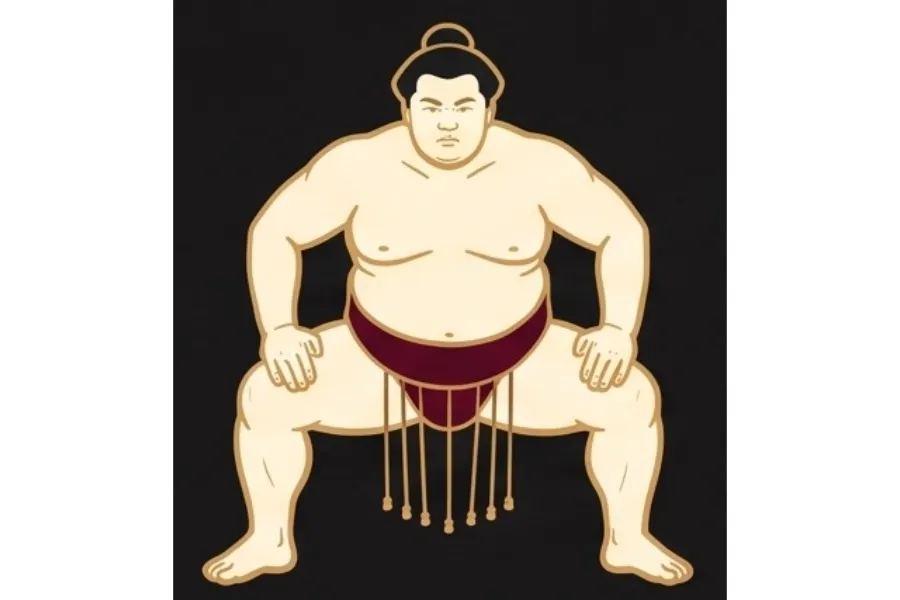
Sumo
Japanese wrestling with over a thousand years of tradition; fought in a circular ring and, in the professional circuit, without weight classes.
JapanSun Bin Quan (Sun Bin Boxing)
Rare Northern Chinese kung fu style characterized by long sleeve strikes.
ChinaSun Style Tai Chi
The youngest of the five tai chi family styles. Its creator already knew xingyi and bagua and joined all three arts — hence the high stances and mobile step.
ChinaSuntukan
Unarmed striking component of Filipino martial arts: punches, elbows, headbutts, and limb destruction techniques.
PhilippinesSystema
A Russian system with no fixed forms; it builds on breath, relaxation and work with tension rather than drilled techniques. Documentation of its origin is thin.
RussiaSystema ROSS
Russian scientific self-defense school approved by the Russian Academy of Sciences.
RussiaSystema Ryabko
Moscow traditional branch of Russian Systema focused on relaxation and internal work.
RussiaTaekkyon
The Korean art of kicks and sweeps, with no hard stances. The movement is continuous and swaying, closer to dance than to fighting; its base is the pumbalki step.
South Korea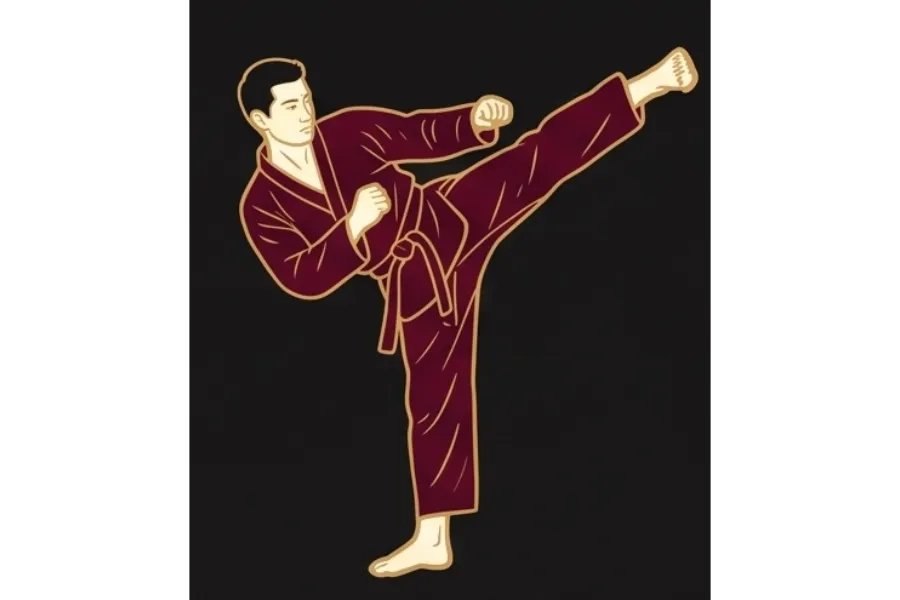
Taekwondo
The Korean art of high, dynamic kicks, unified after the Second World War from nine schools. A full Olympic discipline since 2000.
South KoreaTahtib (Egyptian Stick Fencing)
The Egyptian long-stick game, inscribed by UNESCO. In its modern form nobody is struck — control of the weapon is judged, not the hit.
Egypt Egypt
EgyptTai Chi
The Chinese internal art documented from the seventeenth century. Its founder is Chen Wangting; Zhang Sanfeng is a nineteenth-century legend.
ChinaTaido
A modern Japanese art from 1965 that moves combat into three dimensions — attacks from inverted positions, somersaults and handstands.
JapanTaiho-jutsu (Arresting Art)
The Japanese arresting techniques for the police, compiled in 1947. The aim is to detain a person alive and unhurt, not to win a fight.
JapanTaira-ha Ryukyu Kobudo
Major traditional Okinawan Kobudo lineage systematized by master Taira Shinken.
JapanTaizuquan (Grand Ancestor Fist)
A Chinese style named after the founder of the Song dynasty. The attribution to the emperor is tradition; what is documented is Qi Jiguang'"'"'s 16th-century mention.
ChinaTakagi-ryu Jujutsu
Traditional samurai koryu bujutsu school focused on unarmed close wrestling indoors.
JapanTakamura Shindo Yoshin-ryu
A branch of Japanese jujutsu developed in the United States. Its founder deliberately kept it a small closed group, with no network of dojo.
JapanTakenouchi-ryu Jujutsu
The oldest documented Japanese jujutsu school, founded in 1532; the source of kogusoku koshi no mawari and torite.
JapanTameshigiri
Japanese sword test-cutting: originally a test of blade quality, today a measure of technique, on a tatami omote target.
JapanTang Soo Do
A Korean karate style founded in 1945 by Hwang Kee. It draws on Okinawan karate and on Chinese styles, and is known for high kicks and its system of hyung forms.
South KoreaTanglangquan (Praying Mantis)
A northern Chinese style from Shandong imitating the mantis's hunt. Its signature is the hooked hand that catches and pulls; the southern mantis is a separate lineage.
ChinaTankendo (Way of the Short Sword)
A Japanese short-sword sport, the sister discipline to jukendo. Bouts are fought in kendo armour, with target areas extended by thrusts to the torso.
JapanTarung Derajat
An Indonesian full-contact martial art from Bandung, assembled in 1972 from Achmad Dradjat's street experience.
IndonesiaTatsumi-ryu Heiho
A samurai school from the early sixteenth century where sword, spear, and staff share one curriculum, and in paired forms the sword always wins.
JapanTegumi (Okinawan Wrestling)
Okinawan folk wrestling without strikes, today all but extinct. Funakoshi devoted a chapter to it — as a boy he practised it as often as karate.
JapanTendo-ryu Naginatajutsu
A classical Japanese naginata school from 1582. By tradition its founder established it after a hundred days of prayer; modern atarashii naginata derives from it.
JapanTenjin Shin-ryu Jujutsu
Traditional samurai koryu bujutsu school focused on unarmed locks, throws and pins.
JapanTenjin Shin'yō-ryū
One of the two jujutsu schools from which Jigoro Kano assembled judo. Its hallmark is atemi — a strike meant not to injure but to break the balance.
JapanTenjin Shin'yo-ryu Jujutsu
A jujutsu school from 1830 in which Jigoro Kano trained. Judo took from it the close work, the strangles and locks, and the term randori itself.
JapanTennen Rishin-ryu
A sword school of the late eighteenth century made famous by three members of the Shinsengumi. It trains with an unusually heavy bokuto and bets on strength, not finesse.
JapanTenshin Shoden Katori Shinto-ryu
The oldest surviving Japanese combat school with an unbroken line, assembled around 1447. It knows neither sporting contest nor sparring — only paired kata are practised.
JapanTenshin-ryu Hyoho
Traditional samurai school specialized in sword combat in tight crowds.
JapanTessenjutsu
Japanese fighting art with the iron war fan tessen — a weapon a samurai could keep where he was forbidden to carry a sword.
JapanTetsudo
Modern British martial art system based on Indian-Asian movement principles.
United KingdomTeukgong Moosool
Combat system of the South Korean special forces from 1979, blending hapkido, taekwondo, judo and Chinese arts.
South KoreaThaing Bando
Traditional Myanmar (Burmese) martial art of self-defense and strikes.
Myanmar (Burma)Thang-Ta (Huyen Langlon)
The Meitei martial art of Manipur in India; sword and spear, unarmed sarit sarak, plus ritual and competitive levels.
IndiaThoda (Indian Martial Archery)
Traditional combat archery sport with bow and arrows from Himachal Pradesh, India.
IndiaTianjin Shuai Jiao
The Tianjin branch of Chinese wrestling. Uniquely among the three, it uses qinna joint locks along with elbow and forearm strikes.
ChinaTianshan Pai (Tien Shan Mountain Kung Fu)
A northern Chinese kung fu style from Taiwan whose curriculum Wang Chueh-Jen brought into public teaching in the late 1940s.
ChinaTinku (Andean Ritual Combat)
Quechua for "encounter". A ritual fight from Norte Potosí in Bolivia, where blood spilled is an offering to Pachamama for a good harvest. Held in May.
Bolivia Bolivia
Toda-ha Buko-ryu Naginatajutsu
A Japanese classical naginata school with the hooked kagitsuki glaive; today a Dane heads it and an American is among its teachers.
JapanToda-ryu Kenjutsu
Ancient samurai koryu bujutsu school famed for master short sword Kodachi combat.
JapanTogakure-ryu Ninjutsu
The best known ninja school, covered today by the Bujinkan. No independent source attests it before Toshitsugu Takamatsu — the eight-hundred-year line is unproven.
JapanTomari-te
The smallest of the three Okinawan local traditions, from the village of Tomari. Not a school with a founder; Wadō-ryū and Matsubayashi-ryū follow from it.
JapanTomiki Aikido
The only line of aikido with competition. Kenji Tomiki was a student of both Ueshiba and Kano and brought judo's principle that technique needs a measurable test.
JapanTomoi (Malaysian Bare-Knuckle Boxing)
The Malay boxing of the northern states on the Thai border; fists, elbows, knees and shins, traditionally to drums and pipe.
MalaysiaTongbeiquan (Through-the-Back Boxing)
A northern Chinese style that carries force across the back from one arm into the other. The arms stay relaxed like a rope and stiffen only at the instant of impact.
ChinaToyama-ryu Battojutsu
Japanese swordwork from 1925, assembled at a military school. The draw is made standing and in uniform; classical iaido proceeded from a seated position.
JapanTrinta (Moldavian Wrestling)
Traditional Moldavian national wrestling performed during festival celebrations.
Moldova Moldova
Uechi-ryu
Okinawan karate of Chinese origin, built on tiger, crane and dragon. Recognisable by the one-knuckle punch and by hard body conditioning.
JapanUnkei-ryu Jujutsu
Traditional samurai koryu bujutsu school teaching throws, takedowns and elbow locks.
JapanUrban Krav Maga
British tactical branch of real self-defense for urban environments and nightclubs.
United KingdomVale Tudo
The Brazilian format of near-ruleless fighting from which modern MMA emerged. It arose in the 1920s and 1930s out of circus and fairground matches between different arts.
BrazilVarma kalai
Tamil art of the body's vital points (varmam), with two faces: a martial strike and healing massage within Siddha medicine.
IndiaVarzesh-e Pahlavani (Zurkhaneh)
Iranian physical and moral training in the zurkhaneh house of strength, with mil clubs, the sang shield and koshti wrestling.
Iran Iran
IranVillabrille-Largusa Kali
Hawaiian lineage of Filipino kali after Floro Villabrille, organized into a coherent system by his student Ben Largusa.
PhilippinesVõ Bình Định (Martial Arts of Bình Định Province)
Family of traditional martial lineages from Vietnam's Bình Định province, the cradle of its native martial arts. The staff roi, quyền forms, and ties to the Tây Sơn uprising.
VietnamVovinam
A Vietnamese art founded in Hanoi in 1938 by Nguyen Loc. It rests on the principle of hard and soft together and has been tied to education and national confidence from the start.
VietnamWado-ryu
The only major karate style whose founder was first a master of jujutsu. Hironori Otsuka founded it in 1934; instead of hard blocks it works with evasion.
JapanWeng Chun (Eternal Spring)
A southern Chinese art often confused with wing chun; the names sound almost identical in Cantonese, the systems differ.
ChinaWhiskey Stick Fencing
Traditional variant of Irish fencing with a shortened blackthorn Shillelagh stick.
IrelandWidae Taekkyon
Original traditional Taekkyon branch preserved in royal Hanyang city.
South KoreaWing Chun
A southern Chinese close-range style built on the centreline and economy of motion. Its documented lineage begins in the 19th century; Yip Man and Bruce Lee made it famous.
China
Wrestling
The oldest sporting form of unarmed combat — takedowns, throws and control of the opponent on the ground, without strikes.
GreeceWT Taekwondo
The competitive and Olympic branch of taekwondo under World Taekwondo, founded in 1973. Bouts are decided by an electronic scoring system.
South KoreaWu (Hao) Style Tai Chi
The smallest and least widespread of the five tai chi family styles. Yet it is from its circle that the classical texts underpinning the whole field come.
ChinaWu Style Tai Chi
The second most widespread family style of tai chi, marked by a slightly inclined torso, compact small-frame movements and a focus on push hands.
ChinaWudang Sword
Famous internal Chinese fencing school with straight Jian sword from Wudang.
ChinaWudangquan
A collective name for the internal arts associated with the Wudang mountains and Daoism. The external-internal divide is a seventeenth-century construct, not an ancient classification.
ChinaWushu Taolu (Competition Forms)
The forms half of modern competitive wushu. There is no fighting: the routine is judged on execution, jump difficulty and accuracy of landing.
ChinaWuzuquan (Five Ancestors Boxing)
A southern Chinese style from Fujian composed of five sources. Its Sanzhan form is the same as Okinawan Sanchin — the same characters, the same principle.
ChinaXilam (Mesoamerican Martial Art)
A Mexican art created in 1990 from pre-Columbian iconography. It is a modern reconstruction from codices and reliefs, not a surviving fighting lineage.
MexicoXingyiquan
An internal Chinese art of direct, explosive movement built on the five elements. Tradition traces it to Yue Fei; the documented lineage begins only in the seventeenth century.
ChinaYabusame
Japanese mounted archery: three targets shot from a galloping horse. Minamoto no Yoritomo gave it its ceremonial form at Tsurugaoka Hachimangu in 1187.
JapanYağlı Güreş (Turkish Oil Wrestling)
The Turkish national wrestling style fought in olive oil; the Kırkpınar tournament at Edirne has run since the 14th century.
TürkiyeYagyu Seigo-ryu Battojutsu
Traditional samurai koryu bujutsu school specialized in lightning-fast sword drawing.
JapanYagyu Shingan-ryu Heihojutsu
The Sendai branch of a samurai school from around 1600. Armoured combat with sword and staff, and hard shoulder strikes in place of punches.
JapanYagyu Shingan-ryu Taijutsu
A Japanese old school of fighting in armour. Despite the name it is not a branch of Yagyu Shinkage-ryu, which trains the sword; this one trains grips and throws.
JapanYagyu Shinkage-ryu
The most famous Japanese school of swordsmanship. It arose by adding a family name to Shinkage-ryū, and its Edo branch served the Tokugawa shogunate.
JapanYamanni-ryu Bojutsu
An Okinawan staff-fighting school recognizable by its flexible, swing-driven staff movement, used instead of fixed, stopped blocking positions.
JapanYang Style Tai Chi
The most widespread form of tai chi in the world, with large fluid movements. Today it is taught mainly for health; most schools do not train its combat content against resistance.
ChinaYau Kung Mun (Flexible Hard Power Kung Fu)
A southern Chinese kung fu style; its public history starts with Ha Hon Hung's school in Guangdong in 1924.
ChinaYaw-Yan (Sayaw ng Kamatayan)
A Filipino striking system from 1972; downward-cutting kicks and hand strikes that copy the path of the bolo machete.
PhilippinesYin Style Baguazhang
The oldest family branch of bagua, from Dong Haichuan's first student. It is known by the axe palm: a short, penetrating strike with the edge of the hand.
ChinaYing Jow Pai (Eagle Claw)
The northern Chinese eagle claw style, adding grips and joint locks to long fist. Its documented lineage begins in the nineteenth century, not with Yue Fei.
ChinaYiquan (Dachengquan)
The internal Chinese art that alone abolished forms. Its basis is standing motionless; Wang Xiangzhai held that learned sequences bind the practitioner.
ChinaYongmudo
A Korean hybrid art from 2001, assembled by professors of seven martial arts departments at Yong In University. The year 1953 belongs to the university.
South KoreaYoseikan Aikido
The oldest offshoot of aikido, its dojo dating from 1931. Minoru Mochizuki studied under Kano, Ueshiba and Funakoshi and reassembled budo into one whole.
JapanYoshinkan Aikido
The harder and more precise line of aikido, founded in 1955 by Gozo Shioda. It is the only version of aikido to have entered police training in Tokyo.
JapanZi Ran Men (Natural Boxing)
A Chinese style without forms. Principles of movement are trained rather than kata, so two students of one school look different. Its base is running a one-metre circle.
ChinaZui Quan (Drunken Boxing)
A family of Chinese styles imitating a drunk; the instability is both a deception and a source of power, the history mostly legend.
China